What Your Orthopedic Surgeon May Not Tell You Before Putting Metal in Your Body
Before you agree to plates, screws, pins, rods, anesthesia, facility fees, and permanent metal hardware, ask one simple question:
Can this heal naturally with proper reduction, casting, and follow-up X-rays?
That may be one of the most important questions a fracture patient can ask.
We are not saying every broken bone should be treated without surgery. A severely broken leg, an open fracture, a shattered bone, multiple breaks, a badly unstable fracture, a fracture-dislocation, or a fracture that disrupts the joint surface may require surgery. Some injuries are too unstable to hold safely in a cast.
But that is not the same as a simple, stable, reducible fracture. That distinction matters.
Too often, adult patients are quickly moved toward surgery, plates, screws, pins, rods, and medical hardware without a serious discussion about whether the fracture can be reduced, casted, protected, and monitored while the body heals naturally.
Natural healing is not doing nothing. Natural healing means the bone is properly aligned, immobilized, protected, and monitored while the body performs the biological work of repair.
A cast may cost hundreds of dollars. A fracture surgery pathway can cost tens of thousands of dollars.
Is surgery being recommended because my fracture truly cannot heal safely in a cast, or because the system is financially built around procedures, implants, facilities, and operating rooms?
Severely Broken Is Not the Same as Simply Displaced
There is a major difference between a bone shattered into multiple unstable fragments, an open fracture, a fracture-dislocation, a fracture inside a joint surface, a fracture that is overlapping, rotated, shortened, or unstable, and a simple displaced fracture that can be reduced, aligned, casted, and monitored.
The real questions are: How displaced is it? Is it stable or unstable? Can it be reduced without surgery? Can it stay aligned in a cast? Is the joint surface involved? What evidence shows surgery improves long-term function for this exact fracture pattern?
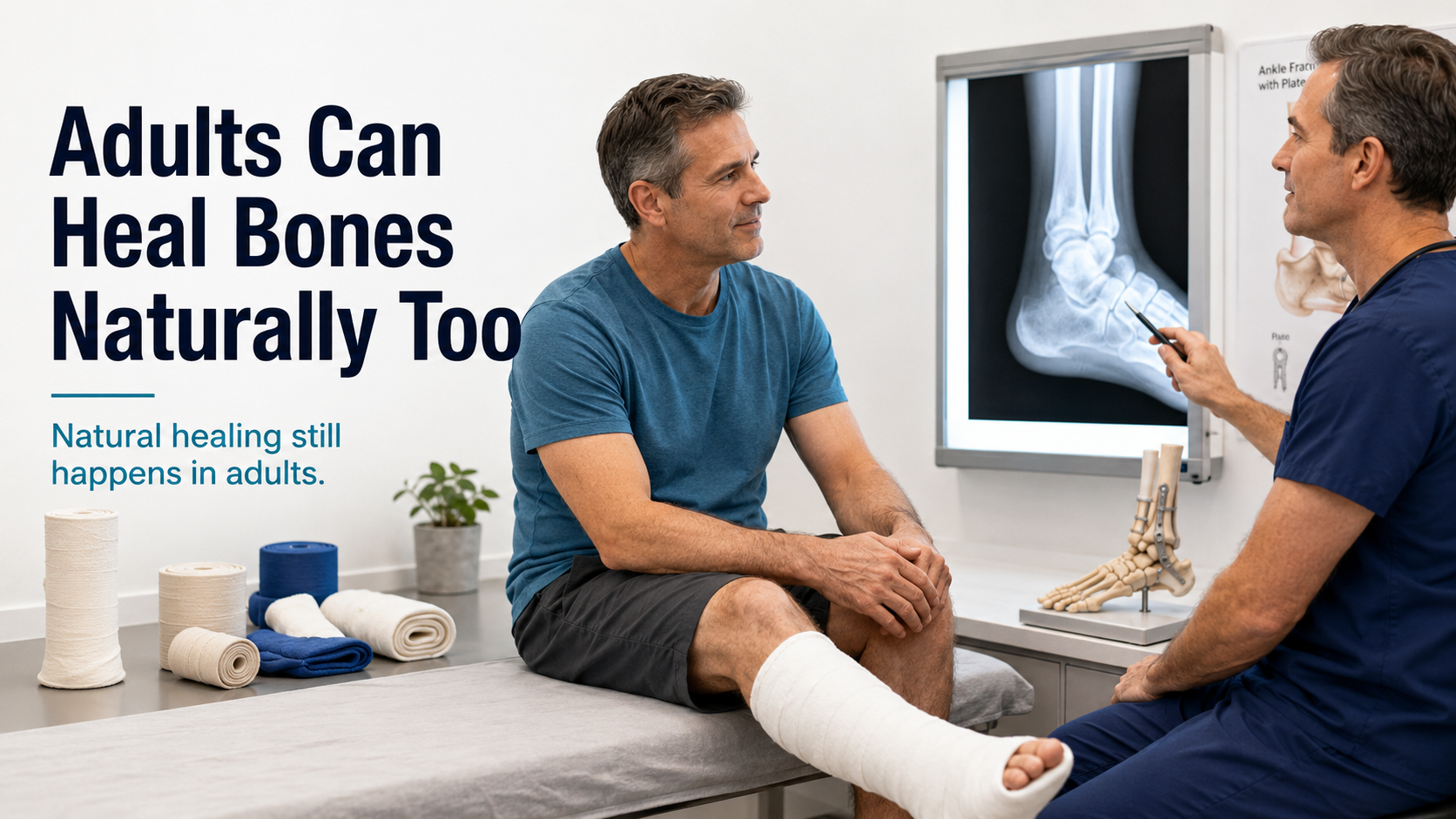
Adults Can Heal Bones Naturally Too
Children do have more remodeling capacity because they are still growing. But adults still heal fractures naturally. Adult bone healing still involves hematoma formation, granulation tissue, callus formation, and bone remodeling. Surgery may hold bone in position, but surgery does not replace biology.
A 16-year-old with a broken leg may be told, "You're young. We can protect this in a cast and watch it heal." A 26-year-old with a similar fracture pattern may hear: "You may need plates and screws." The biology changed somewhat. But the financial incentives changed dramatically.
What changed, the fracture, the biology, or the money behind the treatment pathway?
The better question is: Can this fracture, regardless of my age, be reduced, aligned, immobilized, protected, and monitored without metal hardware?
Sources: NCBI Bookshelf: Fracture Healing Overview and Remodelling in Children's Fractures and Limits of Acceptability.
Less Remodeling Capacity Is Not a Blank Check for Surgery
Less remodeling capacity means adults are less likely than young children to self-correct a poorly aligned healed fracture over time. It does not mean adults cannot heal naturally. It does not mean every adult displaced fracture needs plates and screws. And it does not prove that a cast will fail.
Ask for measurements: How many millimeters displaced? How many degrees of angulation? Is there shortening or rotation? Is the joint surface involved? Can it be reduced without surgery? Can it be casted and rechecked in 7 to 14 days?
Less remodeling capacity is not proof that a cast will fail.
Children Are Often Trusted to Heal in Casts. Why Are Adults So Quickly Pushed Toward Metal?
When children break bones, doctors often talk about reduction, casting, immobilization, monitoring, and natural healing. When adults break bones, the conversation may shift quickly toward plates, screws, pins, rods, anesthesia, facility fees, surgical hardware, and long-term implants.
If this fracture can be realigned without surgery, why are we not trying reduction, casting, and repeat X-rays before putting metal in my body?
A surgeon may be able to make the X-ray look cleaner with hardware. But a cleaner X-ray is not always the same as a better patient outcome.
The Cast vs. Surgery Cost Question Patients Should Ask
A properly applied cast may cost hundreds of dollars. A surgical fracture pathway can cost tens of thousands of dollars once surgeon fees, operating room fees, anesthesia, implants, facility charges, imaging, follow-up care, therapy, and possible hardware removal are included.
Cast pathway: hundreds of dollars. Surgery pathway: potentially tens of thousands of dollars.
When the cost difference is hundreds versus tens of thousands, patients deserve more than "you need surgery."
Clinical Trials Show Surgery Is Not Always Better Long-Term
The WRIST randomized clinical trial found no significant long-term outcome differences between casting and surgical treatments for distal radius fractures in adults age 60 and older at 24 months. Source: JAMA Network Open: WRIST Trial 24-Month Outcomes.
The BMJ DRAFFT2 trial concluded that K-wire surgery did not improve wrist function at 12 months compared with a molded cast. Source: BMJ: Surgical Fixation With K-Wires Versus Casting in Adults With Distal Radius Fracture.
The ProFHER trial found no significant difference between operative and non-operative treatment for displaced proximal humerus fractures at five-year follow-up. Source: Bone and Joint Journal / PMC: Five-Year Follow-Up Results of the ProFHER Trial.
A 2025 review on Weber B ankle fractures states that fractures that regain or maintain joint congruency under weight-bearing should be treated non-surgically in a cast or functional brace for 3 to 6 weeks. Source: Acta Orthopaedica / PMC: Weightbearing Assessment to Guide Nonoperative Treatment of Weber B Ankle Fractures.
If my ankle is stable on weight-bearing X-rays, why is surgery being recommended?
Source: JBJS: Weight-Bearing Stable Weber B/SER Ankle Fractures Treated Nonoperatively.
A published case report described a patient with a displaced, comminuted midshaft clavicle fracture who chose nonoperative management and returned to full function. Source: Orthopedic Reviews: Return to Full Function With Nonoperative Management of a Displaced, Comminuted Clavicle Fracture.
Follow-Up X-Rays Matter Before Jumping to Surgery
British Orthopaedic Association Standards for Trauma state that in ankle fracture patterns where stability is uncertain, patients should be reviewed within two weeks with further radiographs, weight-bearing if possible, to confirm the position remains acceptable.
Can we cast it, protect it, and repeat X-rays before deciding on plates and screws?
Source: British Orthopaedic Association Standards for Trauma: The Management of Ankle Fractures.
Perfect X-Ray vs. Best Patient Outcome
Surgery often creates a cleaner-looking X-ray. But patients should ask whether surgery is being recommended because it is truly necessary for long-term function, or because it creates a more perfect-looking image. A perfect X-ray is not always worth anesthesia risk, incision and wound risk, infection risk, nerve irritation, scar tissue, hardware pain, possible hardware removal, higher cost, lost work time, and permanent metal in the body.
The better question is: Can my body heal this naturally if the bone is properly reduced, immobilized, protected, and monitored?
Why This Needs More Public Awareness
Patients need more public awareness around fracture surgery for the same reason women needed more public awareness around C-sections. C-sections can be necessary, but public awareness grew because many began asking whether they were being performed too often because of scheduling convenience, liability concerns, hospital systems, physician preference, reimbursement, and the medicalization of a natural biological process.
A procedure can be necessary in some cases and still be overused in others. That was the public debate around C-sections. Fracture surgery deserves the same scrutiny.
Before agreeing to surgery, patients should ask: Is this a severe unstable fracture, or a simple displaced fracture? Can it be reduced without surgery? Can it be held in a cast? Can we recheck X-rays in 7 to 14 days? What evidence shows surgery improves my long-term function? Who benefits financially if I choose surgery?
Source: World Health Organization: Caesarean Section Rates.
The System Is Not Neutral
Surgery generates surgeon fees, hospital fees, anesthesia fees, implant charges, imaging, follow-up care, therapy, and sometimes later hardware removal. Conservative casting generates far less revenue.
If a cast costs hundreds and surgery can cost tens of thousands, patients deserve a clear explanation of why surgery is medically necessary.
A 2025 JAMA Network Open cohort study found low-value surgical care in 20% of salaried direct care compared with 35% in the private-sector fee-for-service setting. Source: JAMA Network Open: Surgical Low-Value Care Between Fee-for-Service and Salaried Health Care Systems.
Orthopedic Device Money Is Real
A 2024 analysis of the Open Payments database reported more than one million payments to orthopedic surgeons between 2014 and 2019, totaling approximately $1.6 billion. Patients should not be embarrassed to ask: Do you receive payments from any implant, hardware, or brace companies? Can I look you up in the CMS Open Payments database? Are there non-surgical options that do not involve hardware? What would the conservative-care plan be if I refused surgery today?
Sources: CMS Open Payments Database and PubMed: Industry Payments to Orthopedic Surgeons.
Metal Hardware Is Not Nothing
Orthopedic plates, screws, pins, and rods can be necessary. But metal hardware is not nothing. Patients should ask: What metal is being implanted? Will the hardware stay in permanently? Can the hardware cause pain later? Can it irritate tendons, skin, or soft tissue? Can I react to the metal? How often do your patients need hardware removal?
Before plates and screws, ask whether your body can heal without them.
Walking Boots Are Not the Same as Casts
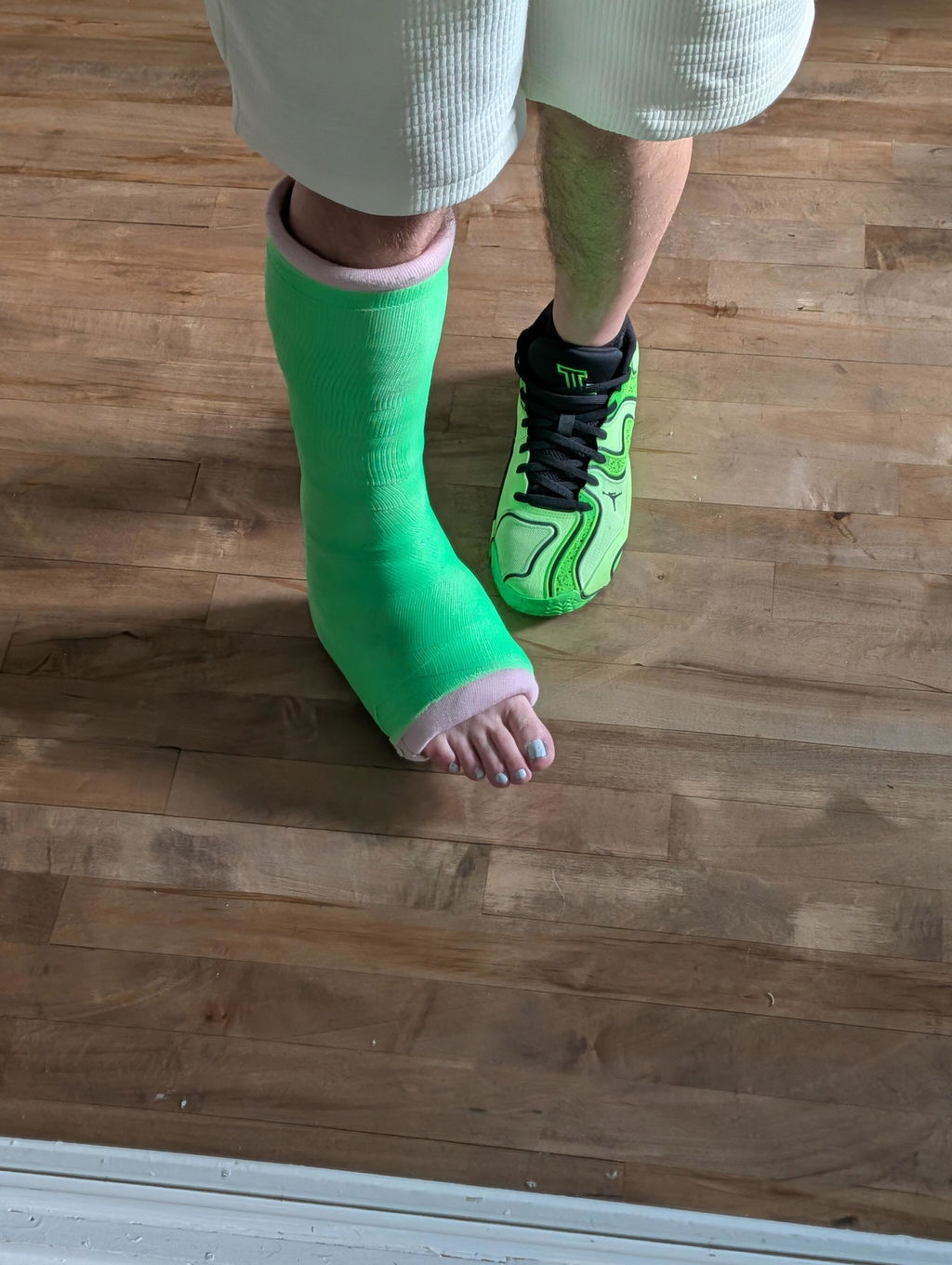
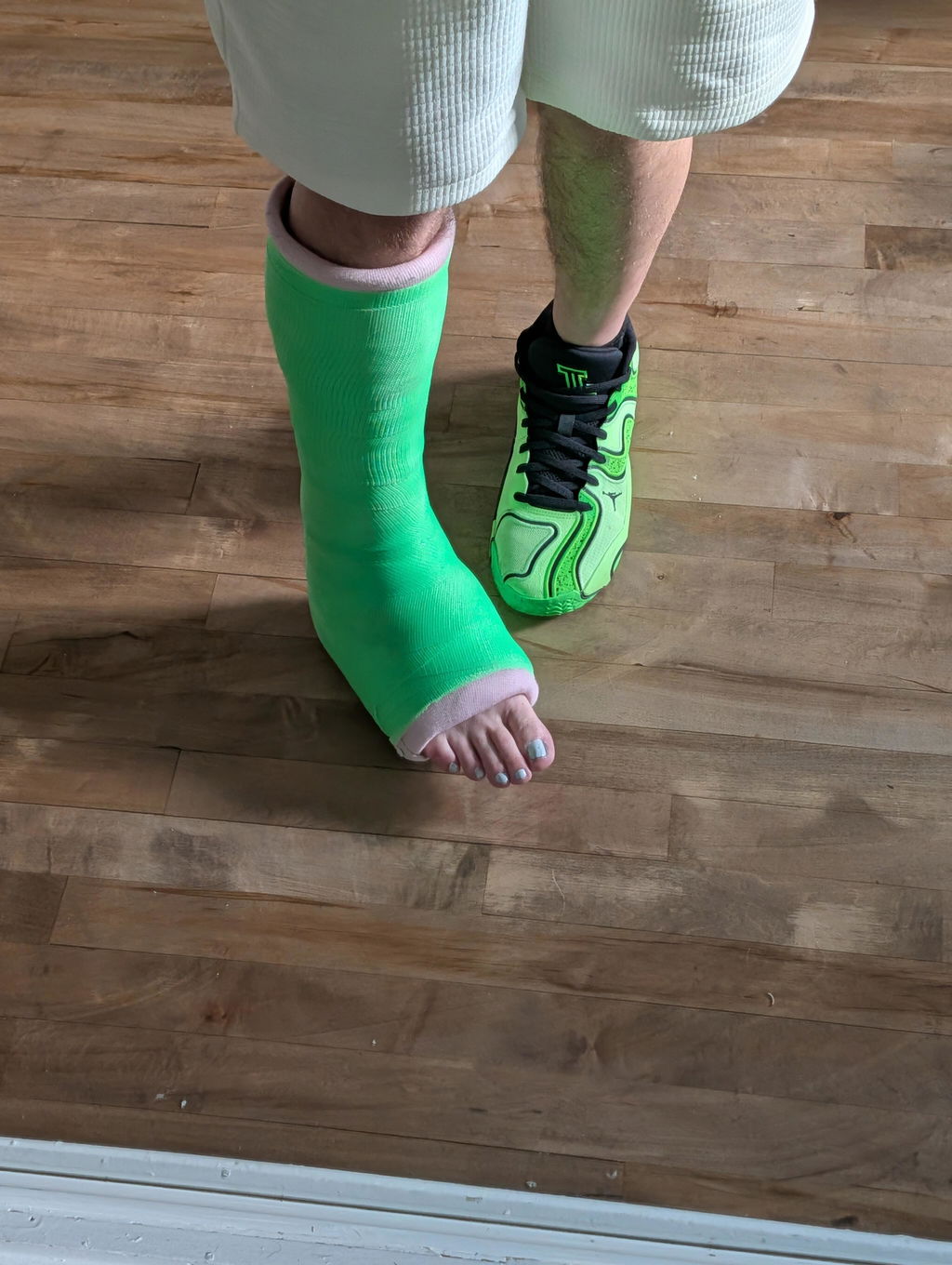
A boot only protects the injury when it is worn correctly. A cast protects the injury 24 hours a day because the patient cannot simply remove it. A cast is custom-molded to the patient. It does not depend on straps, Velcro, air bladders, or the patient remembering to wear it correctly. For fractures that require strict protection, removability can be a weakness, not a benefit.
Source: Stony Brook Orthopaedic Associates: CAM Boot Compliance Study.
Modern Casting Is Not the Same as Old-School Casting
The old argument was simple: a cast cannot get wet, but a boot can come off. That argument is weaker today. Modern waterproof cast padding and waterproof cast liners can allow many properly selected casts to get wet, drain, and dry more effectively than traditional cotton padding systems. That means patients may not need to choose between protection and hygiene in the same way they did years ago.
If a patient is being offered a removable boot mainly because of convenience, bathing, or lifestyle, they should ask whether a waterproof cast system with a walking cast heel is a better protective option.
Modern Waterproof Casting Has Changed the Game
If you or a loved one is in a cast and want the protection of a properly applied cast without sacrificing hygiene, OrthoTape carries waterproof cast kits designed for exactly this. The OrthoH2O Waterproof Cast Liner and Swim Cast Kits are designed to work with fiberglass casts, allowing showering, bathing, and even swimming while keeping the cast padding dry and protected. A cast no longer has to mean choosing between protection and hygiene.
Hard Questions to Ask Before You Agree to Surgery
- Can this heal naturally with proper reduction, casting, and follow-up X-rays?
- Is this severely broken, unstable, shattered, open, or joint-involving, or is it a simple displaced fracture?
- Can this fracture be reduced without surgery?
- Can it be casted and rechecked with X-rays in 7 to 14 days?
- What specific measurement makes this surgical?
- What evidence shows surgery improves long-term function for this exact fracture pattern?
- What do weight-bearing X-rays show?
- What are the risks of plates, screws, pins, rods, anesthesia, infection, nerve injury, blood clots, and wound complications?
- Could the hardware cause pain later? Could it need to be removed later?
- How much will the surgery cost compared with casting, including surgeon fee, facility fee, anesthesia fee, and implant charge?
- Do you have any financial relationship with the implant, brace, or device company?
- Would you document in my chart why casting is not appropriate?
- Would you object to me getting a conservative orthopedic second opinion?
A confident, patient-centered doctor should be willing to answer these questions clearly.
Do Not Let Authority Replace Informed Consent
Doctors have education and training. That matters. But education does not erase a patient's right to ask questions. Informed consent is not real consent if the patient does not understand the conservative option, the cast option, the cost difference, the hardware risks, the bias of a surgery-centered system, and the possibility of natural healing.
Patients should not be pressured into surgery just because they feel intimidated, rushed, or afraid to challenge the expert in the room. Respect medical knowledge. But do not surrender your common sense.
Final Takeaway: Ask Before They Cut
Severely broken bones, open fractures, shattered bones, unstable injuries, multiple breaks, fracture-dislocations, and joint-surface injuries may need surgery. But simple, stable, reducible fractures are different.
If your fracture can be reduced, aligned, protected, immobilized, and monitored, you deserve to know whether your body can heal naturally before you agree to plates, screws, pins, rods, anesthesia, facility fees, and permanent metal hardware.
Ask the question they may not volunteer: Can this heal naturally with proper reduction, casting, and follow-up X-rays?
Then ask the question almost nobody wants to discuss: What does this surgery cost compared with casting, and who benefits financially if I choose hardware?
Frequently Asked Questions
Are doctors and hospitals pushing surgery for fractures that could heal naturally in a cast?
This is a legitimate concern. Surgeons are trained to operate. Hospitals and surgery centers generate far more revenue from surgical procedures than from casting. Medical-device companies profit when plates, screws, pins, rods, and implants are used. Insurance systems often reimburse more for intervention than for conservative care. Patients with simple displaced, stable, or reducible fractures should ask whether the fracture can be reduced without surgery, protected in a cast, and monitored with follow-up X-rays before agreeing to hardware.
Why would a teenager be trusted to heal in a cast, but an adult be told they need surgery?
There are biological differences between teenagers and adults, but that does not mean adults cannot heal naturally. The question should not be age alone. It should be whether the fracture can be reduced, aligned, immobilized, protected, and monitored without surgery. Patients should also recognize that adult fracture care occurs inside a different financial environment.
Ask: What changed, the fracture, the biology, or the financial incentive?
My fracture is displaced. Does that automatically mean I need surgery?
No. Displaced does not automatically mean surgical. A simple displaced fracture may be a candidate for closed reduction, which is manual realignment without surgery. If the bone can be reduced, held in a cast, and monitored with X-rays at 7 and 14 days, patients should ask why surgery is being recommended first.
Can this fracture be manually reduced and held in a cast with follow-up X-rays to confirm alignment?
Can an adult broken bone heal naturally without surgery?
Yes. Adults can heal fractures naturally when the fracture is stable, properly aligned, protected, immobilized, and monitored. Bone healing is a biological process that does not stop at age 18. The body forms a clot, builds soft callus, creates hard callus, and remodels bone. A properly applied cast supports natural healing by keeping the fracture protected and immobilized while the body does the biological repair work.
What types of fractures truly require surgery vs. what can heal in a cast?
Fractures more likely to require surgery include open fractures, severely displaced fractures, comminuted fractures, fracture-dislocations, fractures with significant joint-surface disruption, and fractures that cannot be reduced or held in alignment with a cast. Fractures that may be candidates for natural healing in a cast include stable fractures, minimally displaced fractures, simple displaced fractures that can be manually reduced, and fractures without joint-surface involvement.
How much more expensive is surgery than casting?
A cast pathway may cost hundreds of dollars. A surgery pathway can cost tens of thousands of dollars once surgeon fees, facility fees, anesthesia, implants, imaging, therapy, follow-up care, and possible hardware removal are considered. Patients should ask for the full expected cost of both options before agreeing to surgery.
Why is a cast better than a walking boot for fracture healing?
A cast cannot be removed by the patient. That non-removability is the entire point when strict immobilization matters. A walking boot depends on the patient wearing it correctly and not removing it at the wrong time. A cast removes that compliance risk and is custom-molded directly to the patient's limb.
Why do so many doctors prescribe a walking boot instead of a cast?
Walking boots are fast, convenient, and easy to dispense. They require less skill than applying a proper cast, and patients often like them because they can be removed. But convenience is not the same as protection. Boots are also billable medical devices and can be dispensed at a markup.
Is a boot being recommended because it is better for my fracture, or because it is more convenient?
Can I get a cast wet? Is bathing still a reason to choose a boot over a cast?
Modern waterproof cast liners and waterproof cast padding have changed the old argument against casts. Many properly selected patients can shower with a waterproof cast system, allow it to get wet, and have it drain and dry more effectively than traditional cotton padding systems. If a boot is being recommended mainly for bathing convenience, ask whether a waterproof cast system is appropriate for your injury.
What are the real risks of plates, screws, pins, rods, and surgical hardware?
Risks can include surgical-site infection, anesthesia complications, nerve injury, blood clots, wound problems, hardware irritation, tendon or soft-tissue irritation, chronic pain near the implant, stiffness from scar tissue, metal sensitivity, and the possibility of a second surgery to remove the hardware. Before agreeing to implant surgery, ask: What metal is going into my body? How often does this hardware cause pain? How often do your patients need hardware removal? What happens if I choose casting first?
Should I get a second opinion before agreeing to fracture surgery?
Yes, especially if you feel rushed, do not understand why surgery is necessary, or were not offered casting as a serious option. A doctor who is confident in the recommendation should have no objection to a second opinion. If they discourage it, that is a reason to get one.
What does less remodeling capacity actually mean and is it a valid reason for surgery?
Less remodeling capacity means adults have less ability than young children to self-correct a poorly aligned healed bone over time. It does not mean adults cannot heal naturally. It does not mean a properly applied cast will fail. It does not mean every simple displaced fracture needs plates and screws. The answer to reduced remodeling capacity should be precision, not automatic surgery: proper reduction, proper casting, close follow-up, and repeat X-rays.
If we reduce this fracture, cast it, and monitor alignment at 7 and 14 days, what is the specific risk that it will heal in an unacceptable position?
Why compare fracture surgery to C-sections?
The comparison is about how medical procedures can become normalized, overused, or presented as routine when they are sometimes necessary but not always necessary. C-sections can save lives, but public awareness grew because many people began questioning whether they were being used too often. Fracture surgery deserves the same type of public scrutiny.
What is the one question every fracture patient should ask?
Can this heal naturally with proper reduction, casting, and follow-up X-rays?
If the answer is no, ask why. Ask for the exact measurement, instability, joint involvement, displacement, rotation, shortening, or risk that makes surgery necessary. Do not accept vague authority when a permanent implant and major medical bill are on the line.
This article is for patient education only and is not personal medical advice. Fracture treatment depends on the type of fracture, alignment, stability, patient health, imaging, soft-tissue injury, and clinical judgment. Always consult a qualified medical professional and seek a second opinion when needed.
References
- American Academy of Orthopaedic Surgeons - Ankle Fractures (Broken Ankle)
- NCBI Bookshelf - Fracture Healing Overview
- Journal of Clinical Orthopaedics and Trauma - Remodelling in Children's Fractures and Limits of Acceptability
- JAMA Network Open - WRIST Trial: 24-Month Outcomes After Treatment for Distal Radius Fracture
- BMJ - Surgical Fixation With K-Wires Versus Casting in Adults With Distal Radius Fractures
- Bone and Joint Journal / PMC - Five-Year Follow-Up Results of the ProFHER Trial
- Acta Orthopaedica / PMC - Weightbearing Assessment to Guide Nonoperative Treatment of Weber B Ankle Fractures
- JBJS - Weight-Bearing Stable Weber B/SER Ankle Fractures Treated Nonoperatively
- British Orthopaedic Association Standards for Trauma - The Management of Ankle Fractures
- Orthopedic Reviews - Nonoperative Management of a Displaced, Comminuted Clavicle Fracture
- World Health Organization - Caesarean Section Rates
- JAMA Network Open - Surgical Low-Value Care Between Fee-for-Service and Salaried Health Care Systems
- CMS Open Payments Database
- PubMed - Industry Payments to Orthopedic Surgeons
- Stony Brook Orthopaedic Associates - CAM Boot Compliance Study