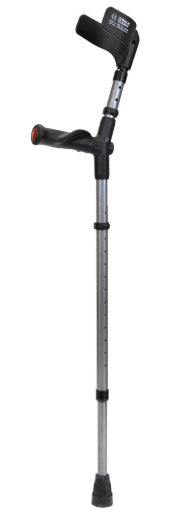
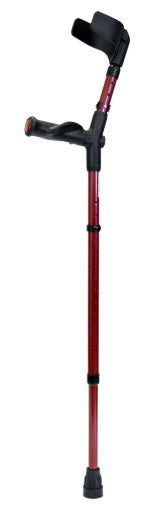
Walk Easy Model 496 Adult Forearm Crutches — Anatomic Grip, Half Cuff
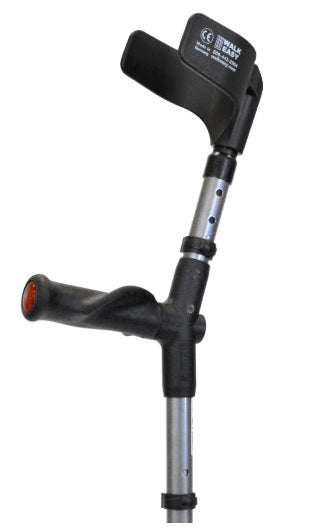
The Walk Easy Model 496 combines a half cuff with an anatomically contoured grip designed to reduce wrist and hand strain during extended crutch use. The ergonomic handle positions the wrist in a more natural angle compared to standard straight grips, making the Model 496 an excellent choice for users who spend significant time on crutches and need to minimize upper-extremity fatigue.
Key Features
-
Anatomic grip — ergonomically contoured to reduce wrist and hand fatigue
-
Half cuff design — open back for easy arm entry and exit
- Lightweight aluminum frame
- Push-button height adjustment
- Sold as a pair
Indications
- Long-term crutch users who need reduced hand and wrist fatigue
- Post-surgical recovery (hip, knee, ankle, foot)
- Neurological conditions requiring forearm crutch support
- Users with wrist or hand sensitivity
Frequently Asked Questions
What is an anatomic grip and why does it matter for crutch users?
An anatomic grip is ergonomically contoured to match the natural shape of the hand and wrist, positioning the wrist at a more neutral angle during crutch use. Standard straight grips can cause wrist extension and ulnar deviation over time, leading to hand and wrist pain. An anatomic grip reduces these stresses, making it especially beneficial for long-term crutch users or those with pre-existing wrist or hand conditions.
What conditions are forearm crutches used for?
Forearm crutches are used for post-surgical recovery (hip, knee, ankle, or foot surgery), fractures requiring non-weight-bearing or partial weight-bearing ambulation, and long-term neurological conditions such as multiple sclerosis, cerebral palsy, spina bifida, and post-stroke hemiplegia.
How do I size forearm crutches correctly?
The handgrip should be at wrist level with the arm hanging naturally, and the forearm cuff should sit 1–2 inches below the elbow. The elbow should have a slight bend (approximately 15–20 degrees) when holding the grip. Always have a physical therapist confirm fit before use.
Can forearm crutches cause wrist or hand pain?
Yes — improper crutch height, incorrect grip technique, or extended use of a standard straight grip can cause wrist extension strain, ulnar nerve compression, and hand fatigue. An anatomic grip like the one on the Model 496 helps reduce these issues by promoting a more neutral wrist position. If you experience persistent wrist or hand pain, consult a physical therapist for a crutch fitting and gait assessment.
Are forearm crutches FSA or HSA eligible?
Yes — forearm crutches are generally FSA and HSA eligible as a qualified medical expense when prescribed or recommended by a physician. Retain your prescription or physician’s recommendation for your FSA/HSA records.
OrthoTape is an authorized Walk Easy dealer. FSA/HSA eligible when prescribed by a physician. This content is for informational purposes only and does not constitute medical advice.