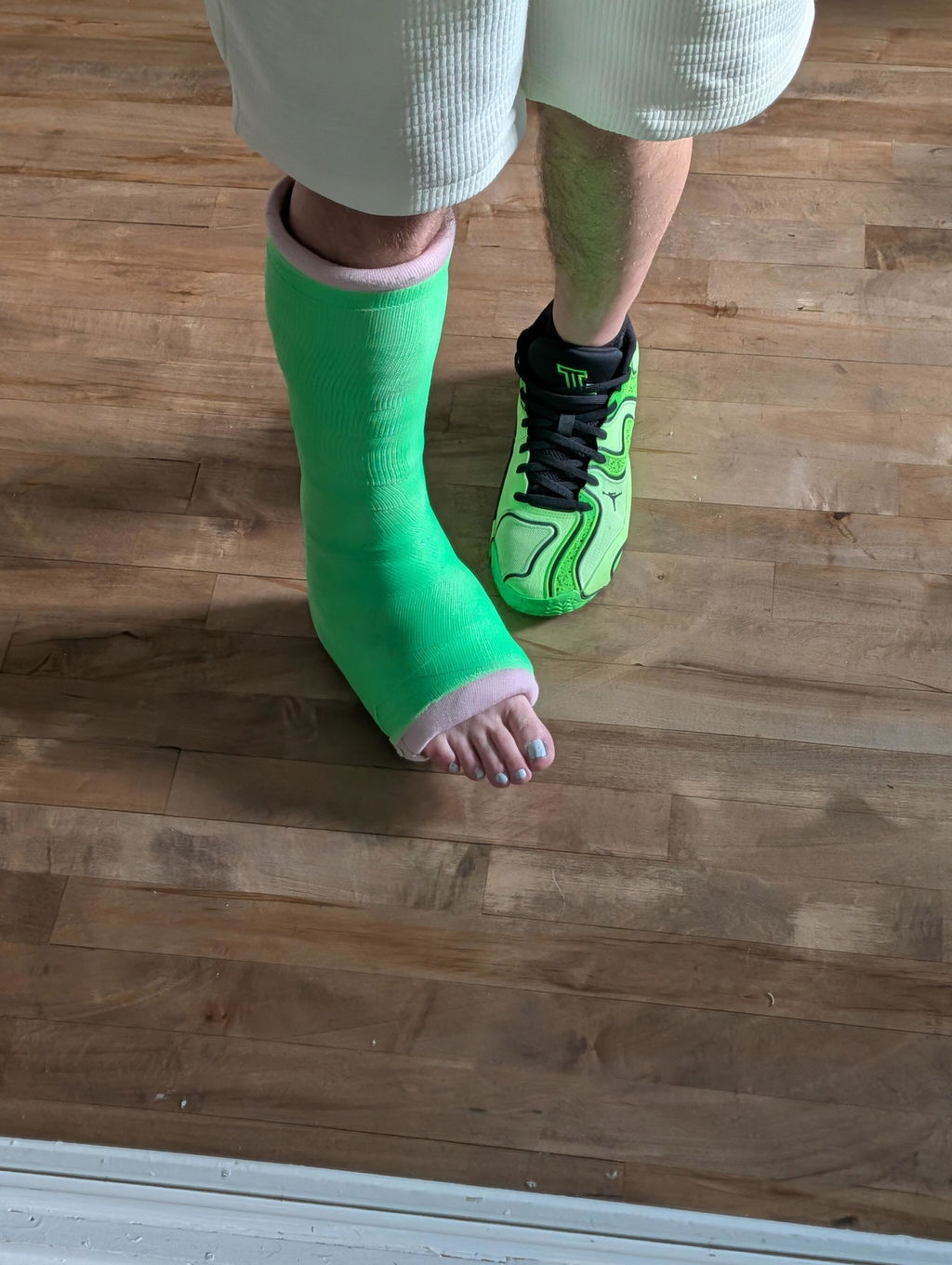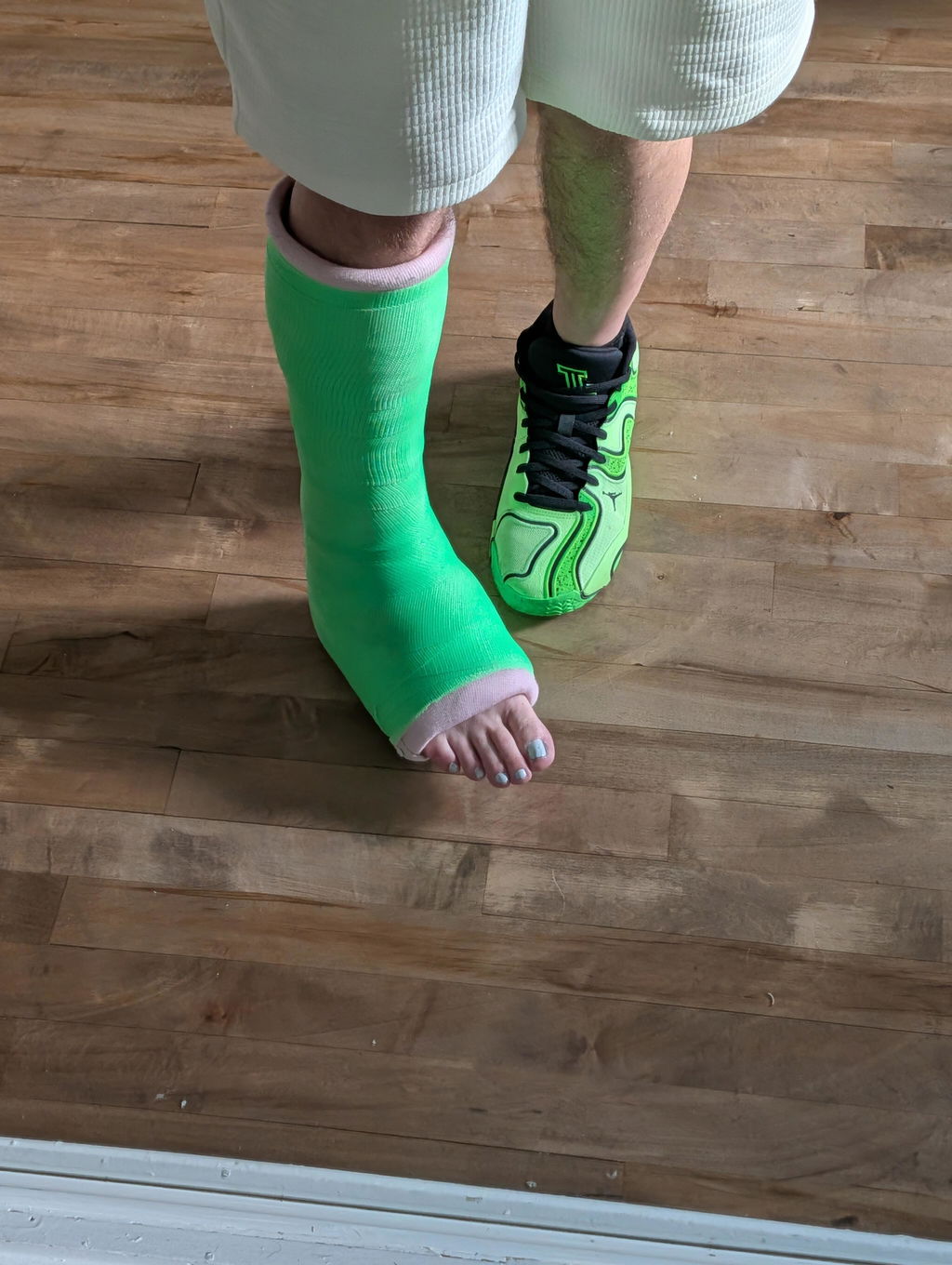
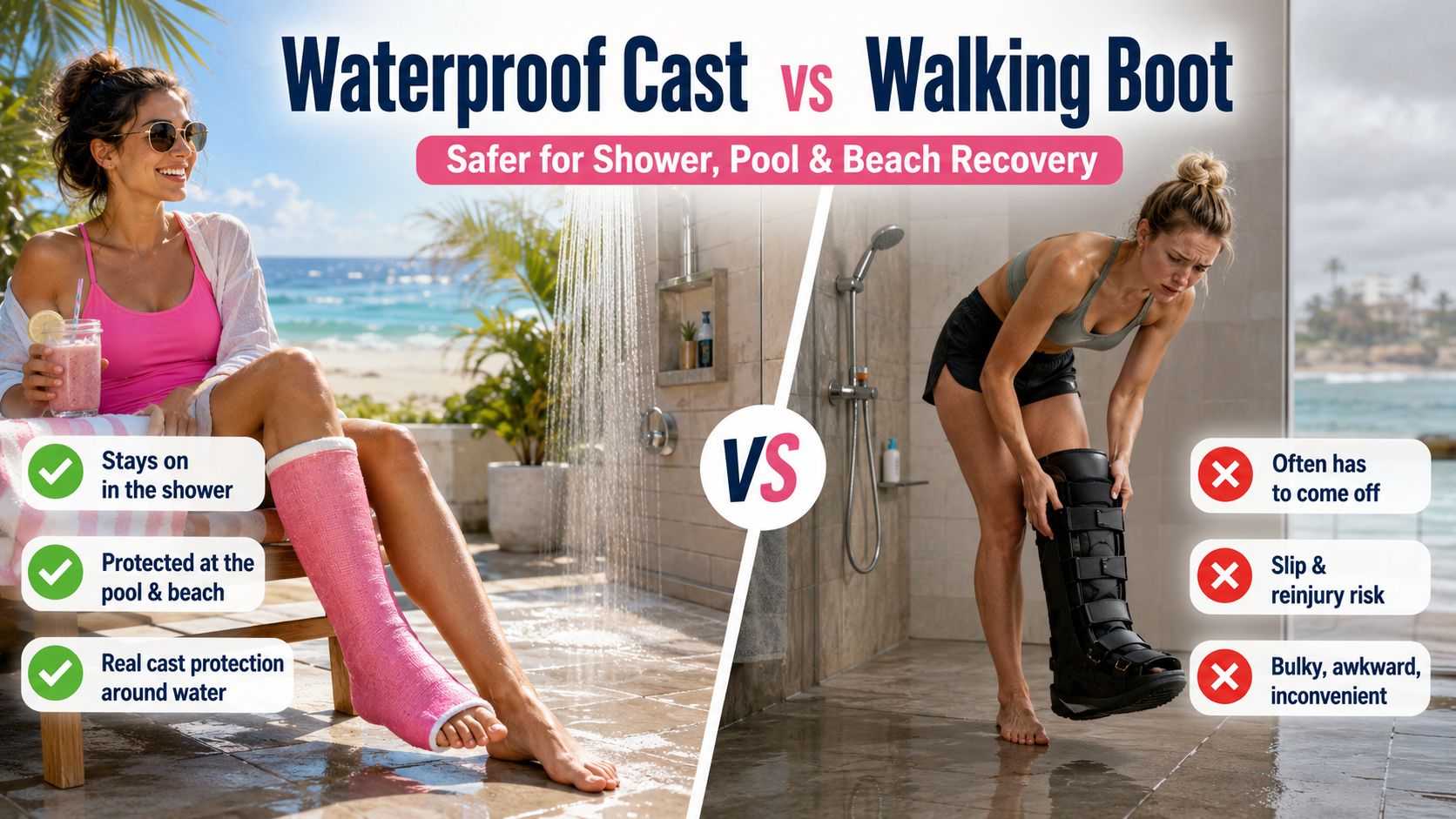
A waterproof short leg cast can do something a walking boot often cannot: stay on and keep protecting the injury around water.
That matters more than many patients realize.
When someone breaks an ankle, foot, or lower leg, the conversation often turns to convenience. Can I shower? Can I go to the beach? Can I get in the pool? Can I get in the ocean? Can I wash normally?
Those are fair questions. But the most important question is this:
Which option protects the injured leg better when real life happens around water?
That is where a waterproof short leg cast can make far more sense than a removable walking boot.
A Waterproof Cast Stays On. That Is the Point.
A short leg waterproof cast keeps the injured leg immobilized while still allowing water exposure when medically approved by the treating clinician.
That means the protection stays on in situations where many patients with a boot have to make a risky choice:
- Take the boot off to shower
- Take the boot off at the pool
- Take the boot off near the beach or ocean
- Walk a few steps without protection
- Risk slipping, twisting, or falling
A waterproof cast solves that problem because the protection stays on the leg.
That is a major difference between a true waterproof cast and a removable walking boot.
The Shower Problem With Walking Boots
Many patients in a walking boot face the same problem every day: showering.
A medical walking boot is bulky, removable, and generally not something people want to wear into the shower. In real life, many patients take the boot off before stepping into the bathroom or shower area.
That is exactly when risk goes up.
If you have a fresh fracture, a healing foot, a healing ankle, or a lower-leg injury, taking off the boot to shower can leave you:
- Unprotected on a slippery floor
- Balancing awkwardly on one leg
- Trying to step in and out of a tub
- At risk of slipping and putting weight on the injured side
- At risk of twisting, re-breaking, or worsening the injury
A short leg waterproof cast avoids that entire cycle because the cast stays on while bathing when medically approved.
The injured area remains protected even in a wet environment.
The Pool and Beach Problem With Boots
The same issue shows up at the pool and beach.
A walking boot is not a good solution for water-based recovery situations. Patients often end up asking:
- Can I get the boot wet?
- Can I walk on sand in the boot?
- Do I take it off at the shoreline?
- What do I do if I want to get in the water?
That creates a dangerous real-world problem.
If the patient takes the boot off to go near the water, the injury may no longer be protected. Wet pool decks, sand, waves, uneven surfaces, and slippery areas all increase the chance of losing balance or stepping wrong.
A waterproof short leg cast can keep the leg protected while still allowing shower, pool, or beach activity when approved by the doctor.
That is a completely different level of peace of mind.
Why the Ocean and Beach Make This More Important
The beach is one of the clearest examples of why a waterproof cast can be a better recovery option than a walking boot.
At the beach, patients with a boot may face all of the following:
- Hot sand
- Loose unstable footing
- Wet sand that shifts under the foot
- Waves hitting the legs
- The temptation to remove the boot
- The temptation to "just be careful" for a few minutes
That is not a great setup for a healing foot or ankle.
A waterproof cast does not make someone invincible, but it does keep a rigid, protective system on the injured leg during those moments. The bone remains protected by the cast instead of relying on the patient to manage a removable device in a wet, unstable environment.
If the goal is protection, a waterproof cast makes far more sense than taking off a boot near water.
A Boot Depends on Patient Behavior. A Cast Does Not.
This is the bigger principle behind the whole issue.
A walking boot only works when the patient:
- Wears it correctly
- Keeps it on
- Does not loosen it too much
- Does not remove it at the wrong time
- Does not try to walk without it
- Does not slip after taking it off
A waterproof cast is different.
It stays on. It keeps protecting the injured limb during the exact situations where a removable boot becomes a problem.
That is why a waterproof cast is not just about convenience. It is about safer protection around water.
Why OrthoH2O Makes More Sense Than a Boot Around Water
OrthoH2O is designed to work under a real fiberglass cast to create a waterproof cast system. It does not replace the cast with a removable brace or boot. It keeps the rigid fiberglass protection while allowing water to drain and the cast to be used in wet conditions when medically approved.
That means patients may be able to:
- Shower more normally
- Go to the pool
- Enjoy summer activities
- Go to the beach
- Get in the ocean or water when their physician says it is appropriate
Most importantly, they may be able to do those things without taking off the protection.
That is the advantage.
Waterproof Cast vs Walking Boot: Side-by-Side
| Feature | Waterproof Short Leg Cast | Walking Boot |
|---|---|---|
| Protection stays on in the shower | Yes, when medically approved | Often removed, creating risk |
| Safer around wet floors | Protection remains on the leg | Removing the boot can expose the injury |
| Pool and beach use | Possible when physician approves | Often impractical or requires removal |
| Protection in the ocean or shoreline area | Cast remains on the leg | Boot may need to come off near unstable wet surfaces |
| Patient compliance | High, because it stays on | Depends on patient behavior |
| Main risk | Must still follow medical instructions | Taking it off can lead to slip, fall, or reinjury |
What Patients Should Ask Before Accepting a Boot
If your doctor recommends a walking boot and you are worried about showering, pool use, or beach activity, ask these questions:
- If I need to shower, is taking this boot off going to expose me to reinjury risk?
- If I go near a pool or beach, what happens if I remove the boot?
- Would a short leg waterproof cast protect my injury better?
- Can I use a waterproof fiberglass cast system instead of a removable boot?
- Is my injury stable enough for a waterproof cast?
- When would pool or ocean exposure be medically safe for my injury?
Those are smart questions, especially for active patients, parents, travelers, and anyone recovering during warm weather or vacation season.
This Is Not Just About Comfort. It Is About Risk.
Too often, the boot gets positioned as the easy option. But the easy option can become the risky option when water is involved.
Shower floors are slippery. Pool decks are slippery. Wet sand is unstable. Stepping in and out of a tub is awkward. Walking to the water without protection is risky.
A waterproof cast removes a big part of that risk because the protection stays in place.
That is a real patient benefit, not just a marketing point.
Final Takeaway
A waterproof short leg cast can do what a removable walking boot often cannot: let the patient stay protected around water.
That matters in the shower. It matters at the pool. It matters at the beach. It matters near the ocean. It matters anywhere a patient may be tempted to take off a boot and "just be careful."
For many patients, a waterproof cast is not just more convenient. It may be the safer option because it keeps the protection on the leg while real life happens.
If water exposure is part of your recovery reality, ask whether a waterproof short leg cast would protect your injury better than a removable boot.
Frequently Asked Questions
Can you swim with a waterproof cast?
In many cases, yes, when a proper waterproof cast system is used and the treating physician approves it. Always confirm with your clinician before swimming or exposing the injury to water.
Can you swim with a walking boot?
A walking boot is generally not the same as a waterproof cast. Many patients remove the boot near water, which can leave the injury unprotected and increase the risk of slipping or reinjury.
Is a waterproof cast safer than a walking boot in the shower?
It can be, because the waterproof cast stays on the leg and continues protecting the injury. A boot often has to be removed, which can increase slip and fall risk on wet bathroom surfaces.
Can you go to the beach with a waterproof cast?
When medically approved, a waterproof cast may allow beach and water activity while keeping the injury protected. Always follow your physician's instructions about weight bearing, swimming, and activity level.
Why is taking off a walking boot risky?
Removing a walking boot can expose the healing injury at the exact time the patient may be on slippery, wet, or unstable surfaces. That creates a chance of twisting, slipping, falling, or worsening the injury.
What is the advantage of OrthoH2O over a boot around water?
OrthoH2O helps create a real waterproof fiberglass cast. That means the rigid cast protection stays on while allowing water exposure when medically approved, instead of forcing the patient to remove a boot.