

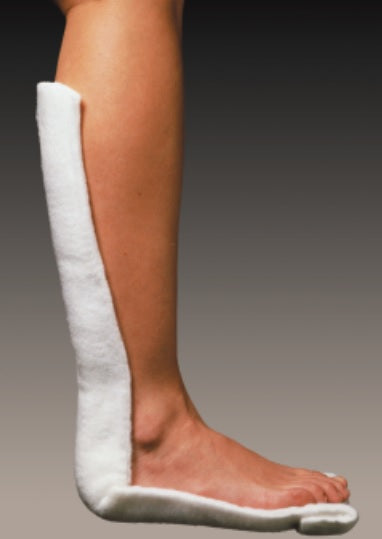


Fiberglass Posterior Ankle Splint Kit Soft Cast and Half Cast
The OrthoTape Fiberglass Posterior Ankle Splint Kit is a complete pre-padded splinting system for clinician-directed ankle and foot immobilization. Patients commonly refer to this style of posterior fiberglass splint as a soft cast, half cast, or removable cast. Unlike a full circumferential cast, the rigid fiberglass support is molded along the back of the lower leg, ankle, and foot and secured with bandage wrap.
The kit includes pre-padded synthetic fiberglass splint material, self-adhesive bandages, synthetic padding for additional protection over bony areas, and gloves. The material is moisture-activated and typically becomes firm within about 5–7 minutes after activation.
What Is a Soft Cast or Half Cast for the Ankle?
A posterior ankle splint is a noncircumferential fiberglass support positioned along the back of the lower leg and underneath the foot. Patients searching for a soft cast, half cast, soft cast for foot, ankle soft cast, or removable cast are often looking for this type of posterior splint.
Unlike a full fiberglass cast that completely surrounds the limb, a posterior splint leaves the front and sides of the lower leg partially open. When applied correctly, this design can provide immobilization while allowing more room for acute swelling.
Common Uses for a Posterior Ankle Splint
A qualified healthcare professional may select a posterior ankle splint when an injury requires stronger immobilization than a simple brace or compression wrap. Common applications can include:
- Severe ankle sprains that require temporary restriction of ankle motion
- Selected ankle fractures, including some distal fibula, tibia, and malleolar injuries
- Selected foot fractures requiring posterior support
- Posterior malleolus fractures when posterior splinting is included in the treatment plan
- Achilles tendon injuries when controlled ankle positioning is prescribed
- Post-operative immobilization following selected ankle or foot procedures
- Temporary immobilization during swelling before transition to a cast, brace, or medical walking boot
Important: The correct splint type, ankle position, wearing time, and weight-bearing status depend on the diagnosis. A healthcare professional should determine the appropriate treatment plan.
Posterior Fiberglass Splint Features
- Posterior fiberglass splint: Moldable fiberglass support extends along the back of the lower leg, ankle, and foot.
- Soft cast and half cast design: Common patient terms for this removable, noncircumferential splint configuration.
- Pre-padded fiberglass splint material: Built-in padding simplifies preparation and application.
- Additional synthetic padding included: Provides extra protection over the ankle and other bony areas when needed.
- Removable configuration: Can be removed when directed for wound checks, skin inspection, hygiene, or follow-up care.
- Quick-setting: Typically becomes firm within approximately 5–7 minutes after moisture activation.
- Radiolucent fiberglass: Designed to allow X-ray imaging through the splint material.
- Three size configurations: Child, Teen, and Adult kits.
- Bandage color options: White, Black, and Hot Pink.
Kit Contents by Size
| Size | Splint Dimensions* | Self-Adhesive Bandage | Synthetic Padding |
|---|---|---|---|
| Child 6–12 | 3" × 35" | 2 Rolls 3" | 1 Roll 2" |
| Teen 13–17 | 4" × 30" | 2 Rolls 3" | 1 Roll 3" |
| Adult 18+ | 5" × 30" | 2 Rolls 3" | 1 Roll 4" |
* Trim the fiberglass splint to the correct length for the individual patient.
How to Apply a Posterior Ankle Fiberglass Splint
- Measure and trim the splint: Measure from the tip of the toes to approximately two finger-widths below the knee. Trim the fiberglass splint material to the required length.
- Pad bony areas: Apply the included synthetic padding over the ankle and other bony prominences that need additional protection.
- Activate the fiberglass: Lightly wet the splint material, remove excess water with a towel, and work promptly after activation.
- Position the posterior splint: Place and contour the splint from the toe plate along the back of the foot, ankle, and lower leg in the position directed by the treating clinician.
- Secure the splint: Fold and contour the corners as needed, then secure the splint with the included self-adhesive bandage. Do not wrap excessively tight, and follow the treating clinician's instructions.

Buying a Fiberglass Splint Kit Directly
This complete kit groups the primary materials needed for posterior ankle splinting into one package rather than requiring the fiberglass splint material, padding, bandages, and gloves to be purchased separately.
Some orthopedic clinics allow patients to obtain their own prescribed or recommended splinting supplies and bring them to the appointment. Clinic policies and insurance reimbursement vary, so confirm requirements with your treating provider and insurance plan before purchase.
For additional ankle treatment options, visit the Ankle Sprain and Fracture Treatment collection or browse all Fiberglass Splint Kits. Both collection URLs are currently live on OrthoTape.
Frequently Asked Questions
Is a posterior ankle splint the same as a soft cast or half cast?
A posterior ankle splint is the clinical product type, while soft cast and half cast are common patient terms for this noncircumferential splint style. The fiberglass support runs along the back of the lower leg and foot rather than wrapping completely around the limb. When applied correctly, this design can accommodate swelling better than a full circumferential cast.
Can I use HSA or FSA funds or submit this splint kit to insurance?
This product is FSA/HSA eligible. Insurance reimbursement and clinic policies vary by plan and provider. Some clinics allow patients to bring their own splinting or DME supplies, but you should confirm coverage and acceptance with your insurance plan and treating clinic before purchase.
Can this be used as a soft cast for a foot or ankle fracture?
A clinician may use a posterior fiberglass splint as temporary or ongoing immobilization for selected foot and ankle fractures, depending on the fracture pattern, swelling, alignment, skin condition, and treatment plan. Fractures should be medically evaluated, and the treating clinician should determine the correct splint, position, wearing time, and weight-bearing status.
What injuries can a posterior ankle splint be used for?
Posterior ankle splints are commonly used for temporary immobilization after severe ankle sprains, selected ankle or foot fractures, Achilles tendon injuries, and some post-operative situations. The correct device depends on the diagnosis and should be selected by a qualified healthcare professional.
Is this a full fiberglass cast?
No. This is a noncircumferential posterior fiberglass splint, often called a half cast or soft cast by patients. A full cast wraps completely around the limb, while a posterior splint supports the back of the lower leg and foot and is secured with bandage wrap.
Does the kit include padding and bandages?
Yes. The kit includes pre-padded synthetic fiberglass splint material, self-adhesive bandages, synthetic padding for additional protection over bony areas, and gloves. The included contents vary by selected size as shown in the size table.
How quickly does the fiberglass splint set?
The fiberglass splint material begins curing after moisture activation and typically becomes firm within about 5 to 7 minutes. Keep the sealed pouch closed until you are ready to apply the splint, and work promptly after activation.
What size posterior ankle splint should I order?
Choose the size that matches the patient and required coverage: Child 6–12 includes a 3-inch by 35-inch splint, Teen 13–17 includes a 4-inch by 30-inch splint, and Adult 18+ includes a 5-inch by 30-inch splint. The splint should be trimmed to the correct length for the individual patient and applied according to the treating clinician's instructions.
Explore Other Fiberglass Splint Kits
OrthoTape also offers fiberglass splint kits for other ankle, wrist, forearm, elbow, hand, and thumb immobilization applications.
| Splint Kit | Common Use |
|---|---|
| Ankle Stirrup Splint Kit | Medial and lateral ankle support |
| Volar Wrist Forearm Splint Kit | Wrist and forearm immobilization |
| Volar Dorsal Wrist Splint Kit | Short-arm wrist immobilization |
View All Fiberglass Splint Kits →
Medical disclaimer: This information is educational and does not replace professional diagnosis or treatment. Fiberglass splints should be applied and monitored according to the treating clinician's instructions. Seek prompt medical evaluation for severe pain, deformity, numbness, circulation changes, open wounds, or suspected fracture.