
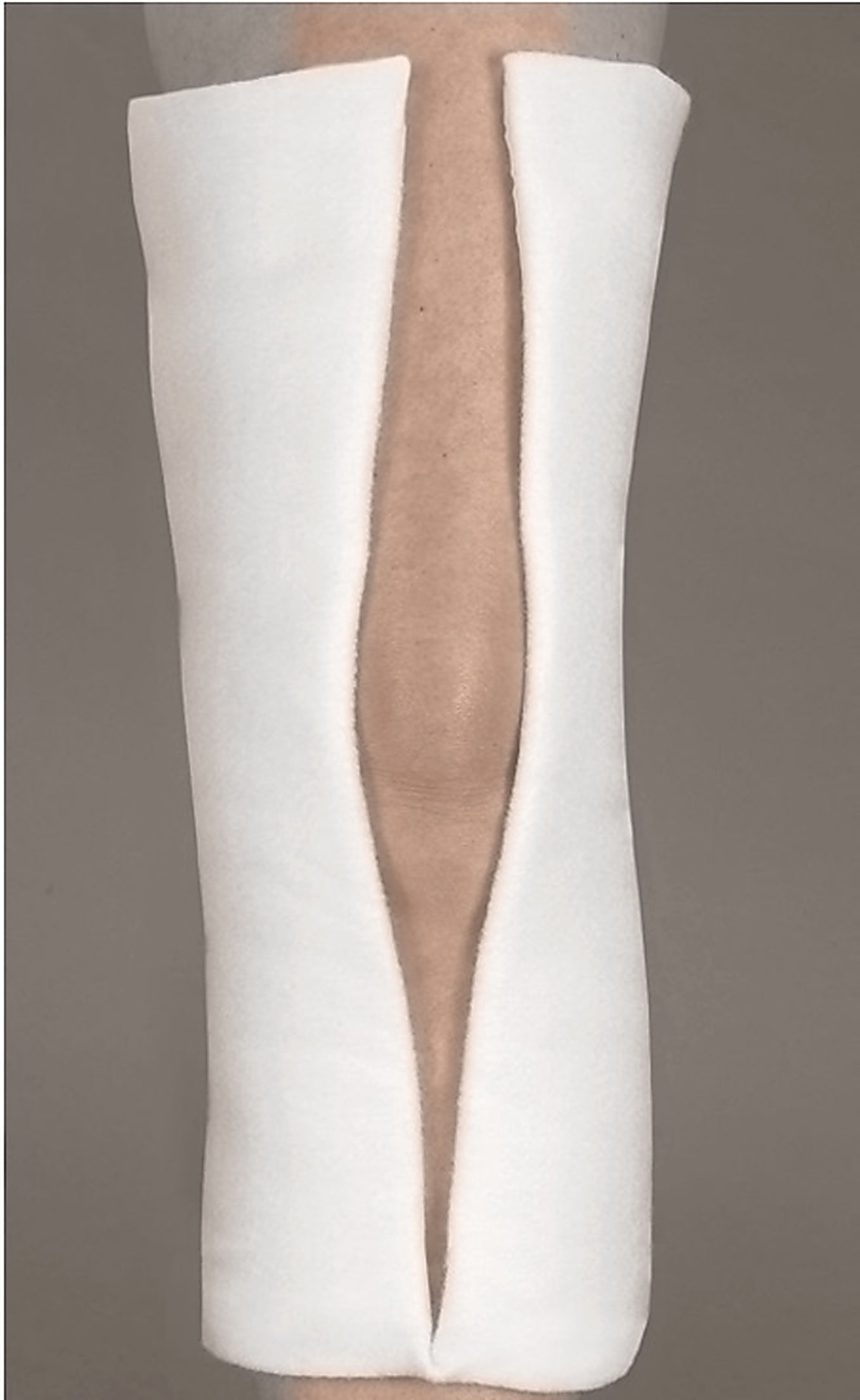
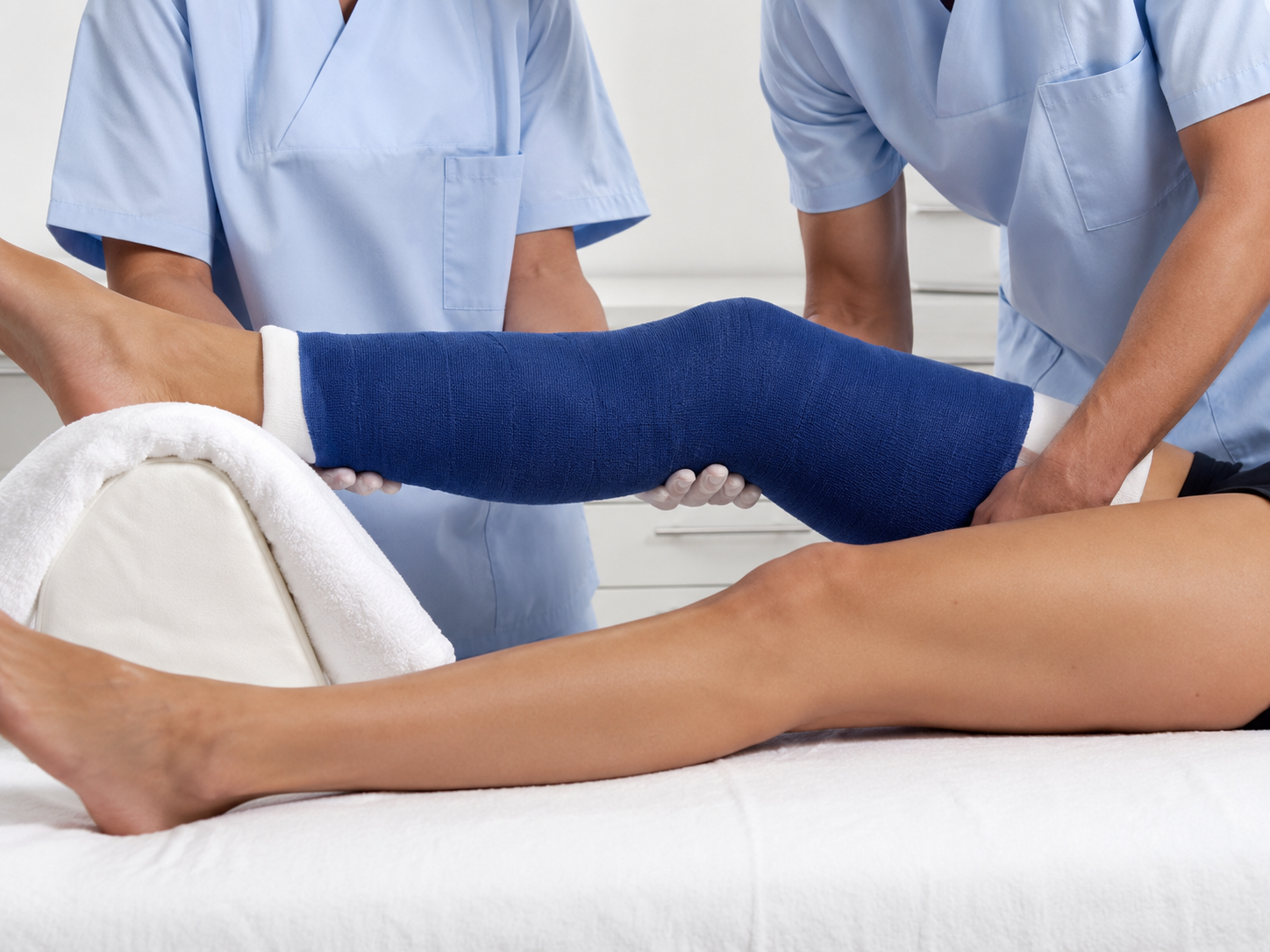
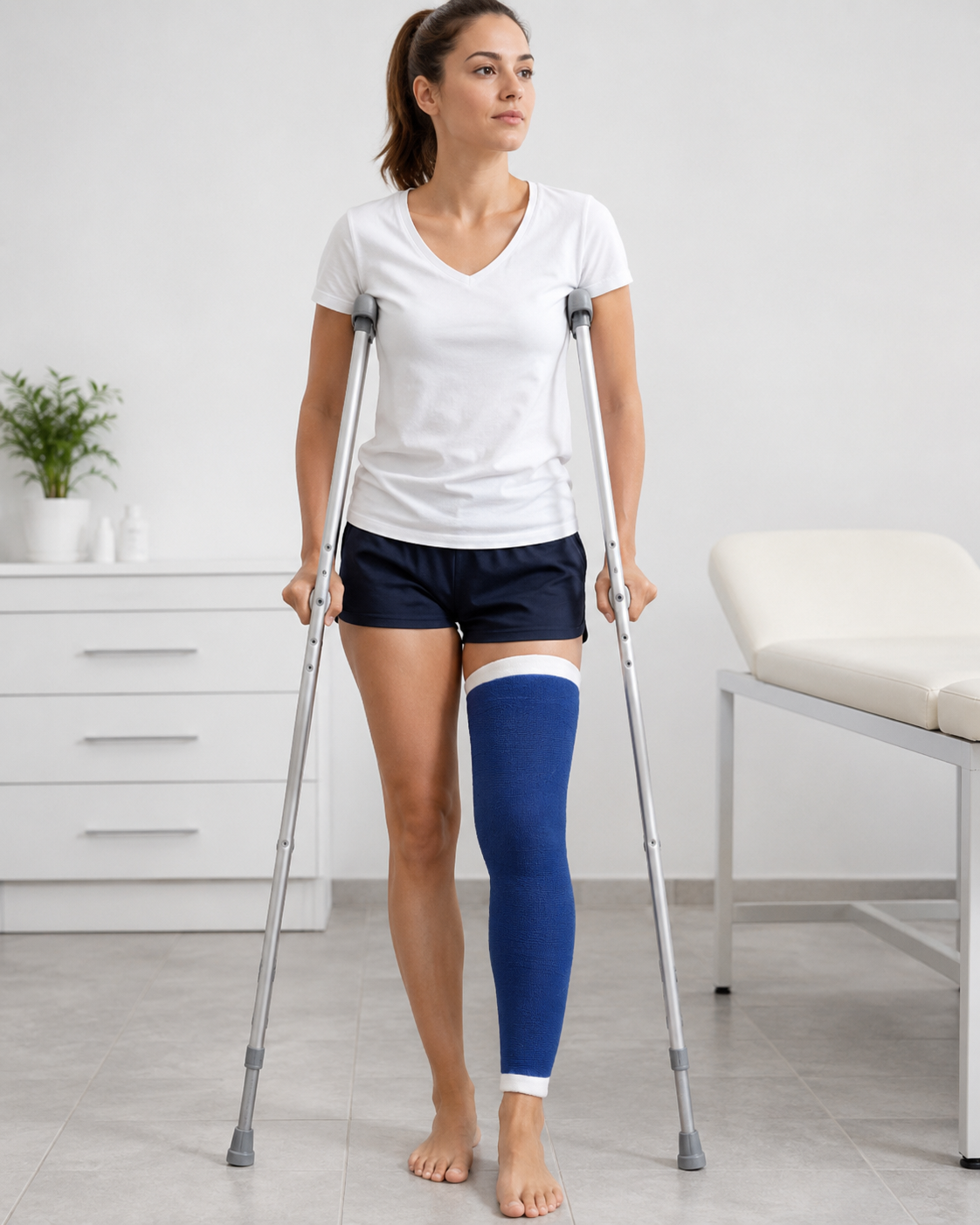


Posterior Knee Splint Kit — Orthopedic Knee Splint for Sprain, Fracture & Leg Immobilization
The professional-grade posterior knee splint — an orthopedic knee support splint and leg immobilization splint — used by emergency departments and orthopedic clinics. If you've been searching for a knee support splint, splint for knee sprain, knee pain splint, knee injury support, posterior leg splint, or a knee immobilization brace alternative — this professional fiberglass kit is the clinical-grade solution. Same posterior knee immobilization from thigh to ankle. Lighter weight. Faster setting. More durable than plaster. Fully removable for wound checks and hygiene.
This complete professional-grade kit includes pre-padded synthetic fiberglass splint material, self-adhesive bandages, and synthetic padding for quick, effective knee sprain treatment and fracture immobilization — with no additional materials needed. Sets in just 5–7 minutes.
Medical Uses & Indications
- Knee Sprain Treatment — ACL, PCL, MCL, and LCL ligament injuries requiring immobilization
- Patella Fractures — Kneecap fractures requiring full leg immobilization
- Tibial Plateau Fractures — Upper tibia fractures at the knee joint
- Knee Dislocations — After reduction and stabilization
- Knee Injury Support — Quadriceps/patellar tendon injuries and partial tears
- Post-operative Immobilization — After knee surgery
- Knee Pain Splint — Immobilization for acute knee pain from trauma or post-surgical swelling
Key Features
- Orthopedic Knee Splint: Professional-grade fiberglass — same as used in ERs and orthopedic clinics
- Leg Immobilization Splint: Full-length posterior design from upper thigh to ankle
- Posterior Leg Splint Design: Applied to the back of the leg — allows swelling while maintaining rigid immobilization
- Soft Cast / Removable Half Cast: Can be removed for wound checks, hygiene, and follow-up imaging
- Pre-Padded Design: Padding already built in — no extra layers or stockinette needed
- Quick-Setting: Hardens in just 5–7 minutes
- Complete Kit: Includes splint, self-adhesive bandages, cast padding, and gloves
- Radiolucent: Compatible with X-ray imaging without removal
- Multiple Sizes: Child through adult sizing available
- Color Options: White, Black, and Hot Pink bandage colors available
Kit Contents by Size
| Size | Splint Dimensions* | Self-Adhesive Bandage | Synthetic Padding |
|---|---|---|---|
| Child 6–12 | 4" × 30" | 2 Rolls 3" | 1 Roll 3" |
| Teen/Small Adult | 4" × 30" | 2 Rolls 3" | 1 Roll 4" |
| Adult | 4" × 30" | 2 Rolls 3" | 2 Rolls 4" |
How to Apply a Posterior Knee Splint
Frequently Asked Questions — Posterior Knee Splint & Knee Sprain Treatment
What is a posterior knee splint and how is it different from a knee brace?
A posterior knee splint provides rigid full-leg immobilization from the upper thigh to the ankle — used acutely for fractures, dislocations, and severe ligament injuries. A standard knee brace allows controlled movement and is used during rehabilitation.
Is this a good splint for knee sprain treatment?
Yes — this is the standard splint for knee sprain used in emergency departments for Grade II–III ligament injuries (ACL, PCL, MCL, LCL). It provides complete knee injury support and leg immobilization during the acute phase.
Is a posterior knee splint the same as a soft cast or removable half cast?
Yes — a posterior knee splint is the clinical name for what patients commonly call a soft cast, half cast, or removable cast for the knee. The soft cast design allows room for swelling and can be removed for wound checks, hygiene, and follow-up imaging.
What is a posterior knee splint used for?
A posterior knee splint is used to immobilize the knee following fractures, dislocations, or severe ligament injuries. It is the standard of care for patella fractures, tibial plateau fractures, knee dislocations, severe ACL/PCL/MCL/LCL injuries, and post-operative knee immobilization.
How long do you wear a posterior knee splint after a fracture or sprain?
For knee sprain treatment: Grade II–III sprains typically require 2–6 weeks. Patella fractures typically require 4–6 weeks. Tibial plateau fractures may require 6–12 weeks. Knee dislocations typically require 3–6 weeks. Your orthopedic surgeon will determine the appropriate duration.
Can a posterior knee splint be used after ACL or PCL surgery?
Yes. This orthopedic knee splint is commonly used in the immediate post-operative period following ACL reconstruction, PCL repair, and multi-ligament knee surgery. After the acute phase (typically 1–2 weeks), patients are usually transitioned to a hinged knee brace allowing controlled range of motion.
What size posterior knee splint should I order?
Select based on patient age and leg size. This leg immobilization splint must run from the upper thigh to just above the ankle for proper immobilization. If between sizes, size up for better coverage.
Explore Other Fiberglass Splint Kits
| Splint Kit | Best For |
|---|---|
| Posterior Ankle Splint Kit | Ankle fractures, sprains & Achilles injuries |
| Ankle Stirrup Splint Kit | Lateral ankle stability |
| Long Arm Splint Kit | Elbow fractures & dislocations |
| Volar Wrist Splint Kit | Wrist fractures & sprains |
| Ulnar Gutter Splint Kit | Boxer fractures (4th/5th metacarpal) |
| Thumb Spica Splint Kit | Thumb fractures & sprains |
→ View All Fiberglass Splint Kits
OrthoTape is an authorized dealer of all products sold on this site. This product should be applied by a trained medical professional or for educational training. Always consult a doctor before use for proper diagnosis and treatment. FSA/HSA eligible — check with your plan administrator. HCPCS: A4570.