
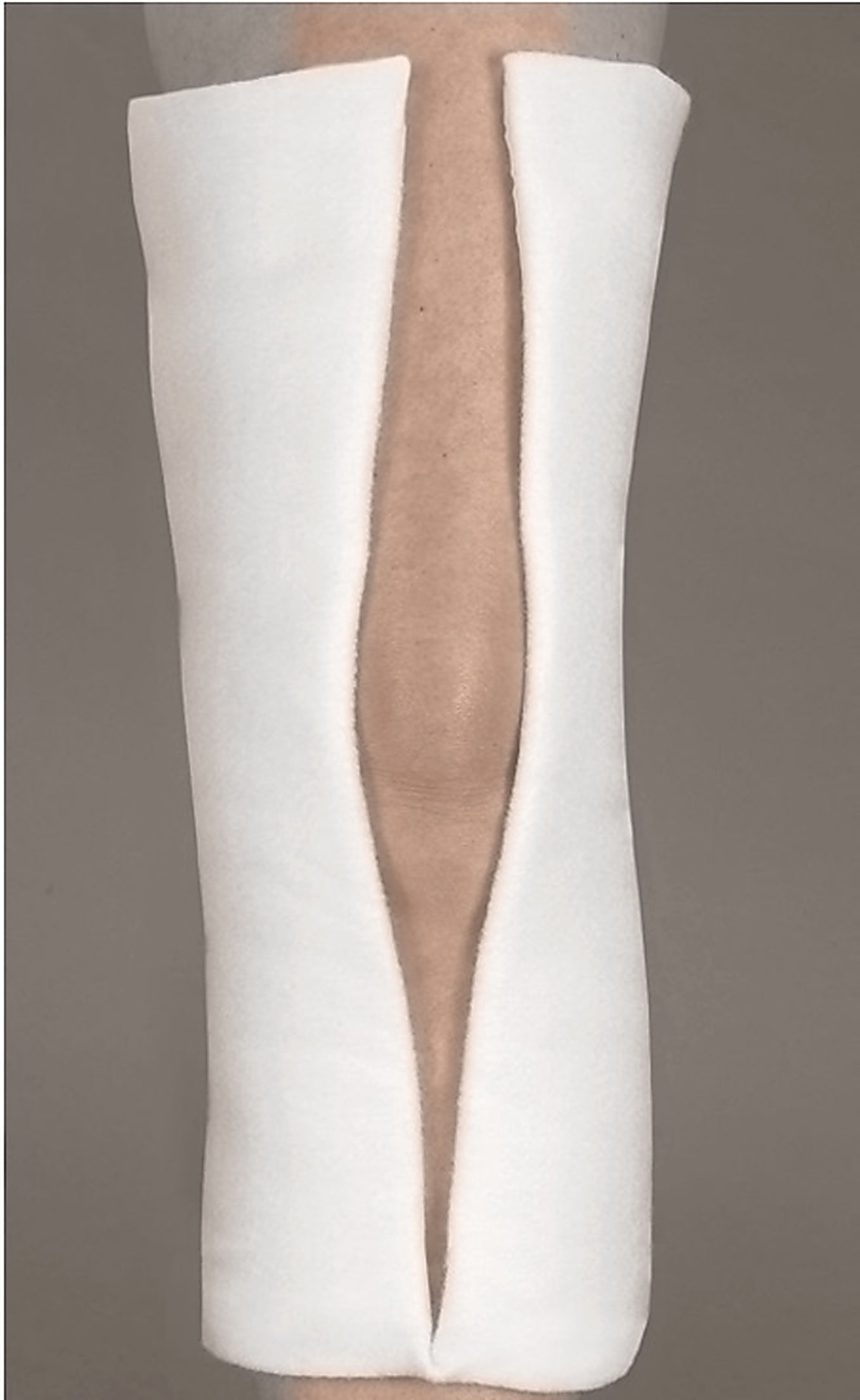

Posterior Knee Splint Kit — Fiberglass Knee Fracture & Sprain Treatment
The professional-grade posterior knee splint used by emergency departments and orthopedic clinics. If you've been searching for a plaster knee splint, plaster leg splint, or posterior knee plaster — this is the upgraded fiberglass version that clinicians now use instead. Same posterior knee immobilization from thigh to ankle. Lighter weight. Faster setting. More durable than plaster.
This complete professional-grade kit includes pre-padded synthetic fiberglass splint material, self-adhesive bandages, and synthetic padding for quick, effective knee immobilization — with no additional materials needed. Sets in just 5–7 minutes.
Medical Uses & Indications
- Patella Fractures — Kneecap fractures requiring full knee immobilization
- Tibial Plateau Fractures — Upper tibia fractures at the knee joint
- Knee Dislocations — After reduction and stabilization
- Severe Knee Sprains — ACL, PCL, MCL, and LCL ligament injuries
- Quadriceps/Patellar Tendon Injuries — Partial tears requiring immobilization
- Post-operative Immobilization — After knee surgery or procedures
Key Features
- Pre-Padded Design: Padding already built into splint material — no extra layers or stockinette needed
- Quick-Setting: Hardens in just 5–7 minutes for fast patient care
- Full-Length Posterior Design: Runs from upper thigh to ankle for complete knee immobilization
- Complete Kit: Includes splint, self-adhesive bandages, cast padding, and gloves
- Professional Quality: Same materials used by orthopedic specialists and emergency departments
- Prevents Flexion/Extension: Stops harmful knee movement during healing
- Radiolucent: Compatible with X-ray imaging without removal
- Multiple Sizes: Child through adult sizing available
- Color Options: White, Black, and Hot Pink bandage colors available
What Is a Posterior Knee Splint?
A posterior knee splint runs along the back (posterior) side of the leg from the upper thigh past the knee down to the ankle. This design immobilizes the knee joint in a stable, slightly flexed position while preventing flexion and extension movements that could disrupt healing. It is the standard of care for acute knee fractures, dislocations, and severe ligament injuries in emergency and orthopedic settings.
Historically made from plaster of Paris, modern clinical practice has shifted to fiberglass — which sets faster, weighs significantly less, and is far more durable than traditional plaster splints, while providing the same quality of immobilization.
Kit Contents by Size
| Size | Splint Dimensions* | Self-Adhesive Bandage | Synthetic Padding |
|---|---|---|---|
| Child 6–12 | 4" × 30" | 2 Rolls 3" | 1 Roll 3" |
| Teen/Small Adult | 5" × 30" | 2 Rolls 3" | 1 Roll 4" |
| Adult | 6" × 30" | 2 Rolls 3" | 2 Rolls 4" |
* Trim the splint to the correct length for the individual patient. Check your kit packaging for exact dimensions as sizes may vary by configuration.
How to Apply a Posterior Knee Splint
Why Buy Direct Instead of at Your Doctor's Office?
Purchasing your posterior knee splint kit directly from OrthoTape offers significant advantages over getting it at your doctor's office or emergency room. Emergency room splint applications can cost $300–600 or more when billed through insurance, while our complete kit costs a fraction of that. Our splint materials are the same professional-grade products — if not better — than what your doctor or ER uses, meeting or exceeding all industry standards.
Many medical offices have limited inventory and may only stock basic white bandages, while we offer multiple color options. By ordering from us, you get exactly what you need at a fraction of the cost, with fast shipping directly to your door.
Frequently Asked Questions — Posterior Knee Splint
What is a posterior knee splint used for?
A posterior knee splint is used to immobilize the knee following fractures, dislocations, or severe ligament injuries. It runs along the back of the leg from the upper thigh to the ankle, preventing harmful flexion and extension during healing. It is the standard of care for patella fractures, tibial plateau fractures, knee dislocations, severe ACL/PCL/MCL/LCL injuries, quadriceps and patellar tendon tears, and post-operative knee immobilization.
How long do you wear a posterior knee splint after a fracture?
Duration depends on the injury type and severity. Patella fractures typically require 4–6 weeks of immobilization. Tibial plateau fractures may require 6–12 weeks depending on displacement and surgical status. Knee dislocations typically require 3–6 weeks of splinting followed by a hinged brace and physical therapy. Your orthopedic surgeon will determine the appropriate duration based on imaging and clinical assessment.
Can a posterior knee splint be used after ACL or PCL surgery?
Yes. Posterior knee splints are commonly used in the immediate post-operative period following ACL reconstruction, PCL repair, and multi-ligament knee surgery to protect the repair and control swelling. After the acute phase (typically 1–2 weeks), patients are usually transitioned to a hinged knee brace that allows controlled range of motion. Always follow your surgeon's specific post-operative protocol.
Is fiberglass better than plaster for a posterior knee splint?
Yes — fiberglass is now the clinical standard over plaster for posterior knee splints. Fiberglass is significantly lighter (reducing leg fatigue during wear), sets faster (5–7 minutes vs. 24–72 hours for plaster), is more durable and water-resistant, and is radiolucent for X-ray compatibility. Plaster splints are still used in some settings but fiberglass has largely replaced them in modern emergency and orthopedic care.
What size posterior knee splint should I order?
Select based on patient age and leg size. The knee splint must run from the upper thigh to just above the ankle for proper immobilization. If between sizes, size up for better coverage. Check your kit packaging for exact splint dimensions as configurations may vary.
Explore Other Fiberglass Splint Kits
Looking for a different splint type? OrthoTape offers complete fiberglass splint kits for upper and lower extremities — all with the same pre-padded, ready-to-apply design:
| Splint Kit | Best For |
|---|---|
| Posterior Ankle Splint Kit | Ankle fractures, sprains & Achilles injuries |
| Ankle Stirrup Splint Kit | Lateral ankle stability |
| Long Arm Splint Kit | Elbow fractures & dislocations |
| Volar Wrist Splint Kit | Wrist fractures & sprains |
| Volar/Dorsal Wrist Short Arm Splint Kit | Short arm immobilization |
| Sugar Tong / Reverse Sugar Tong Wrist Kit | Distal radius & Colles' fractures |
| Ulnar Gutter Splint Kit | Boxer fractures (4th/5th metacarpal) |
| Thumb Spica Splint Kit | Thumb fractures & sprains |
→ View All Fiberglass Splint Kits
OrthoTape is an authorized dealer of all products sold on this site. This product should be applied by a trained medical professional or for educational training. Always consult a doctor before use for proper diagnosis and treatment. Knee injuries should be evaluated by a medical professional to rule out serious fractures, ligament damage, or vascular complications. FSA/HSA eligible — check with your plan administrator. HCPCS: A4570.