
Elbow Splint vs. Hinged Elbow Brace: Which One Do You Need After Injury or Surgery?
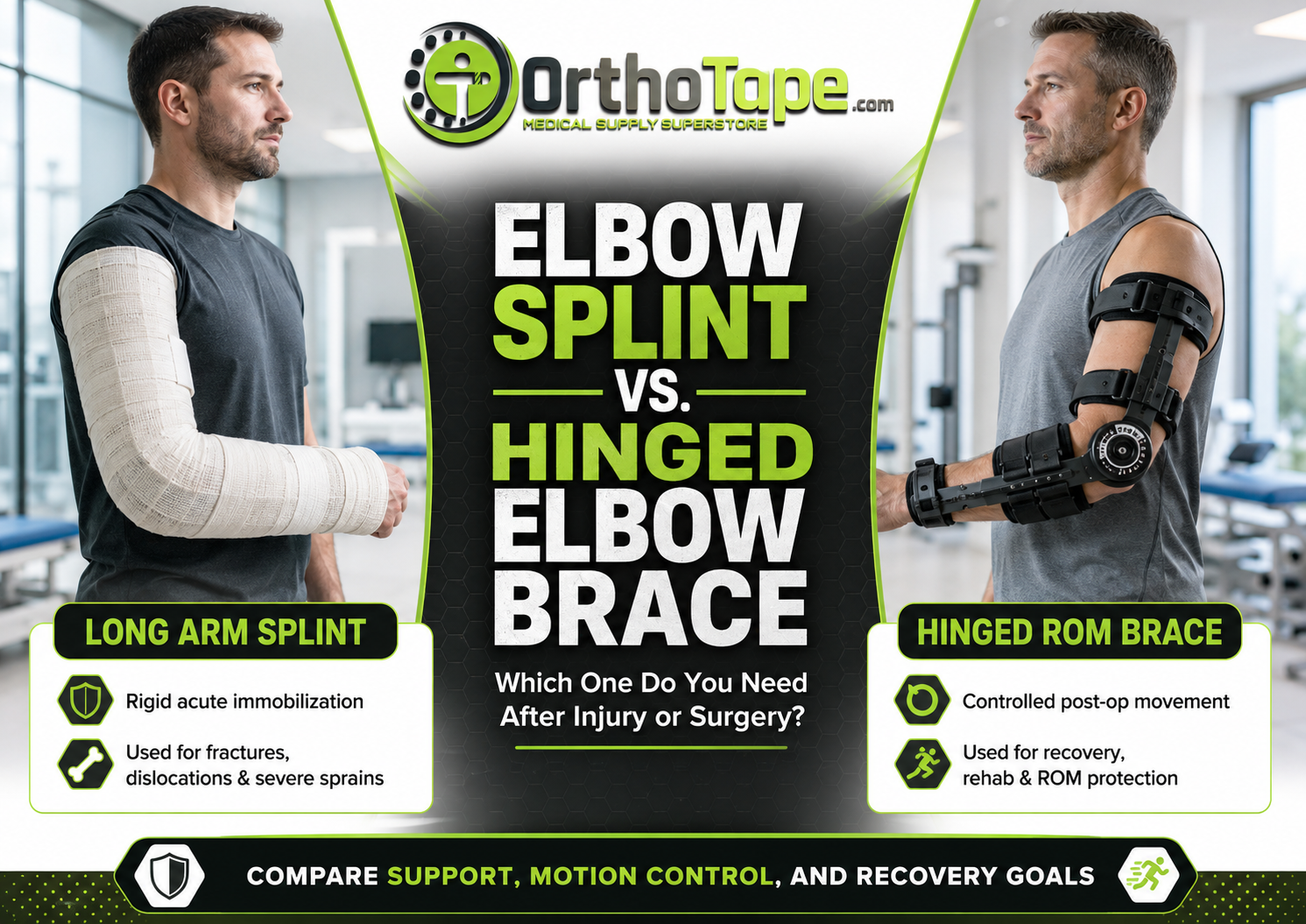
A posterior long arm splint, post-operative hinged ROM brace, hyperextension brace and compression support solve different problems. The key question is whether the elbow must remain still, move only through a prescribed arc, resist backward bending during activity or receive light compression.

LONG ARM SPLINT: rigid acute immobilization
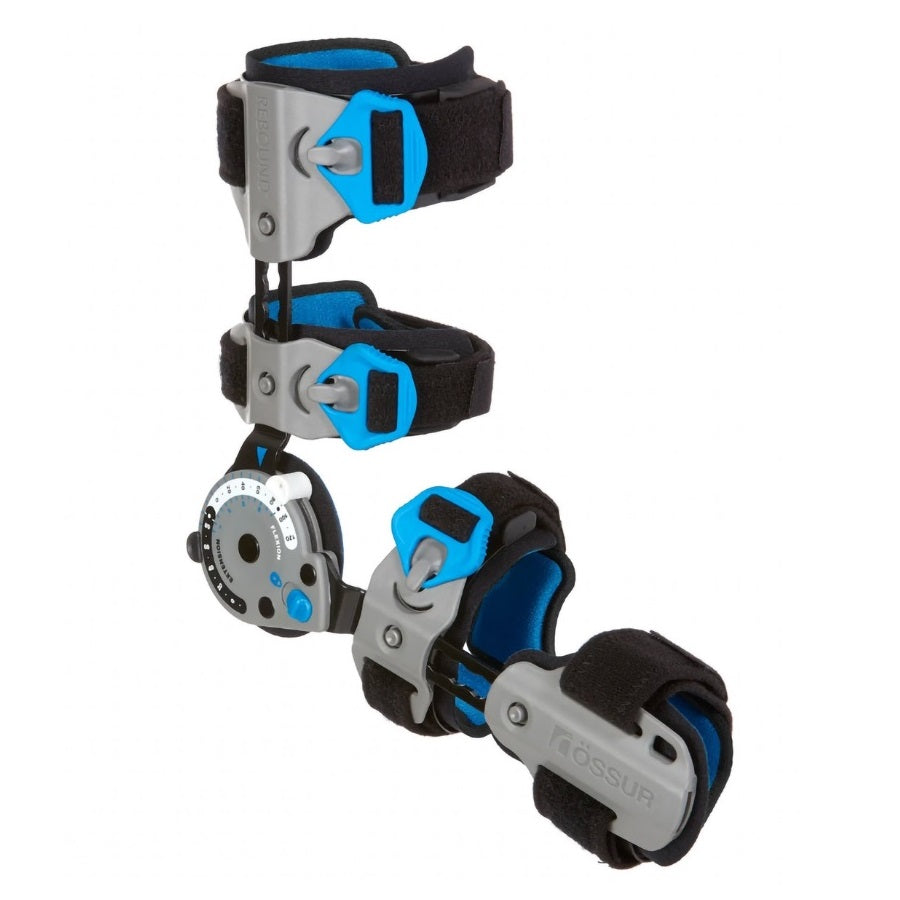
HINGED ROM BRACE: prescribed controlled movement
Four Different Levels of Elbow Support
Posterior long arm splint
A rigid fiberglass slab runs along the back of the upper arm, elbow and forearm. It is wrapped in place while leaving room for swelling.
Post-op hinged ROM brace
A long mechanical brace limits flexion and extension to the exact range prescribed by the surgeon or therapist.
Hyperextension brace
A lower-profile hinged design helps resist the elbow moving backward beyond the approved range during activity.
Compression sleeve or wrap
A flexible support provides compression and warmth but does not immobilize the elbow or mechanically control ROM.
Elbow Splint vs. Hinged Brace Comparison
| Feature | Posterior Long Arm Splint | Post-Op Hinged ROM Brace | Hyperextension Brace | Compression Support |
|---|---|---|---|---|
| Main purpose | Keep the elbow relatively still during acute protection | Protect healing structures while permitting prescribed motion | Resist backward bending and selected rotational stress | Provide light compression and general support |
| Motion | Substantially restricted | Locked or limited through adjustable stops | Functional motion with hyperextension resistance | Generally unrestricted |
| Typical stage | Immediate injury, swelling phase or early post-op | Post-operative and progressive rehabilitation | Later rehabilitation and approved return to activity | Mild diagnosed conditions or general protection |
| Common examples | Selected fractures, dislocations and severe sprains | Fracture fixation, ligament reconstruction and tendon repair | UCL or collateral-ligament instability and hyperextension risk | Chronic inflammation, mild sprain or activity support |
| Who sets it? | Clinician applies and positions the splint | Clinician prescribes and changes hinge settings | Clinician determines appropriateness, size and activity use | Fit according to diagnosis and product instructions |
What Is a Posterior Long Arm Elbow Splint?
A posterior long arm splint extends from the upper arm, around the back of the elbow and down the forearm. Unlike a full circumferential cast, the rigid slab is secured with bandage material, which can better accommodate early swelling. The elbow angle and forearm position depend on the injury and must be selected by the treating clinician.
The OrthoTape Long Arm Posterior Elbow Splint Kit contains pre-padded fiberglass splint material, bandages and padding for professional application after selected elbow and arm injuries.


AAOS explains that after an elbow dislocation is reduced, a splint may be used to keep the elbow still, followed by prescribed range-of-motion work. It also notes that extended immobilization can impair elbow motion. Read the AAOS elbow dislocation overview.
What Is a Post-Operative Hinged Elbow ROM Brace?
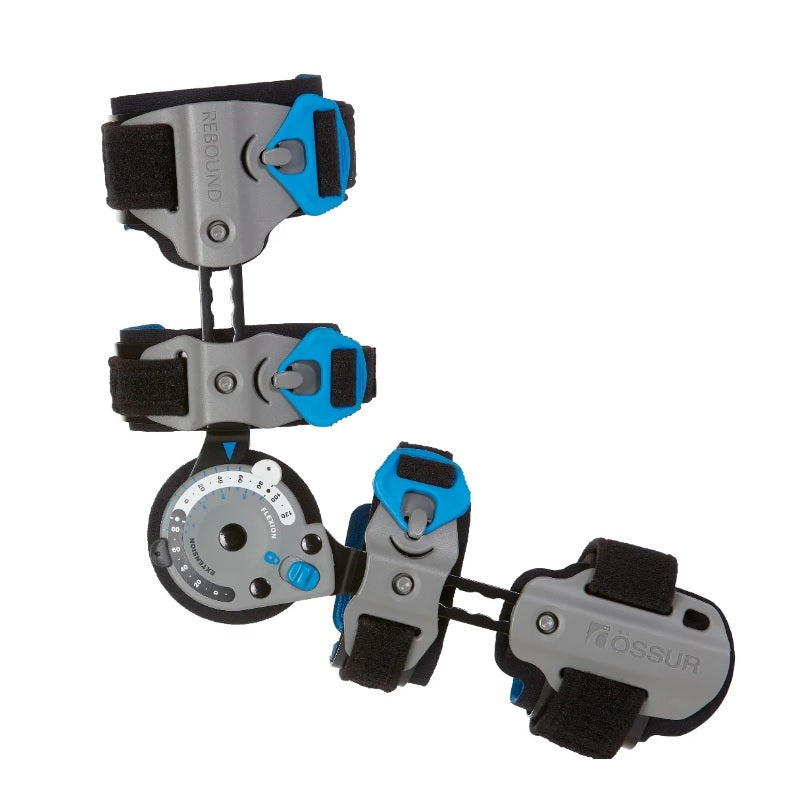
A hinged ROM brace is not simply a softer replacement for a splint. Its purpose is to allow a controlled arc of movement while preventing the elbow from entering ranges that could stress healing bone, ligaments, tendons or surgical repairs.
The Ossur Rebound Post-Op Elbow Brace uses telescoping paddles, moldable cuffs and a drop-lock hinge. The DeRoyal Warrior Post-Operative Elbow Brace uses a single lateral hinge with adjustable flexion and extension control. Both are side-specific professional rehabilitation braces.

Why Controlled Motion Matters
Elbows are prone to stiffness after significant injury or prolonged immobilization. At the same time, moving too soon or beyond the prescribed range can disrupt healing. The purpose of a ROM brace is to balance those competing needs under clinical supervision.
One possible recovery progression
- Acute protection: A splint may protect the elbow while swelling, stability and the need for surgery are evaluated.
- Protected motion: A hinged post-operative brace may permit a limited arc while blocking unsafe flexion or extension.
- Progressive rehabilitation: The clinician may gradually change the permitted range as healing and strength improve.
- Functional protection: A lower-profile brace may be used during approved work, exercise or return to sport.
AAOS describes splinting followed by a brace and gentle motion as one possible course for selected nondisplaced olecranon fractures. The exact timing varies by fracture stability and follow-up imaging. Review the AAOS olecranon fracture information.
What Is an Elbow Hyperextension Brace?
A hyperextension brace is generally shorter and more flexible than a post-operative ROM brace. It is designed to resist the elbow moving backward past the approved range while still allowing functional bending during cleared activity.
The DeRoyal Hypercontrol Elbow Brace combines medial and lateral aluminum hinge bars, criss-cross straps and an elbow pad. It is intended for selected ligament instability, hyperextension risk and return-to-sport applications after medical clearance.
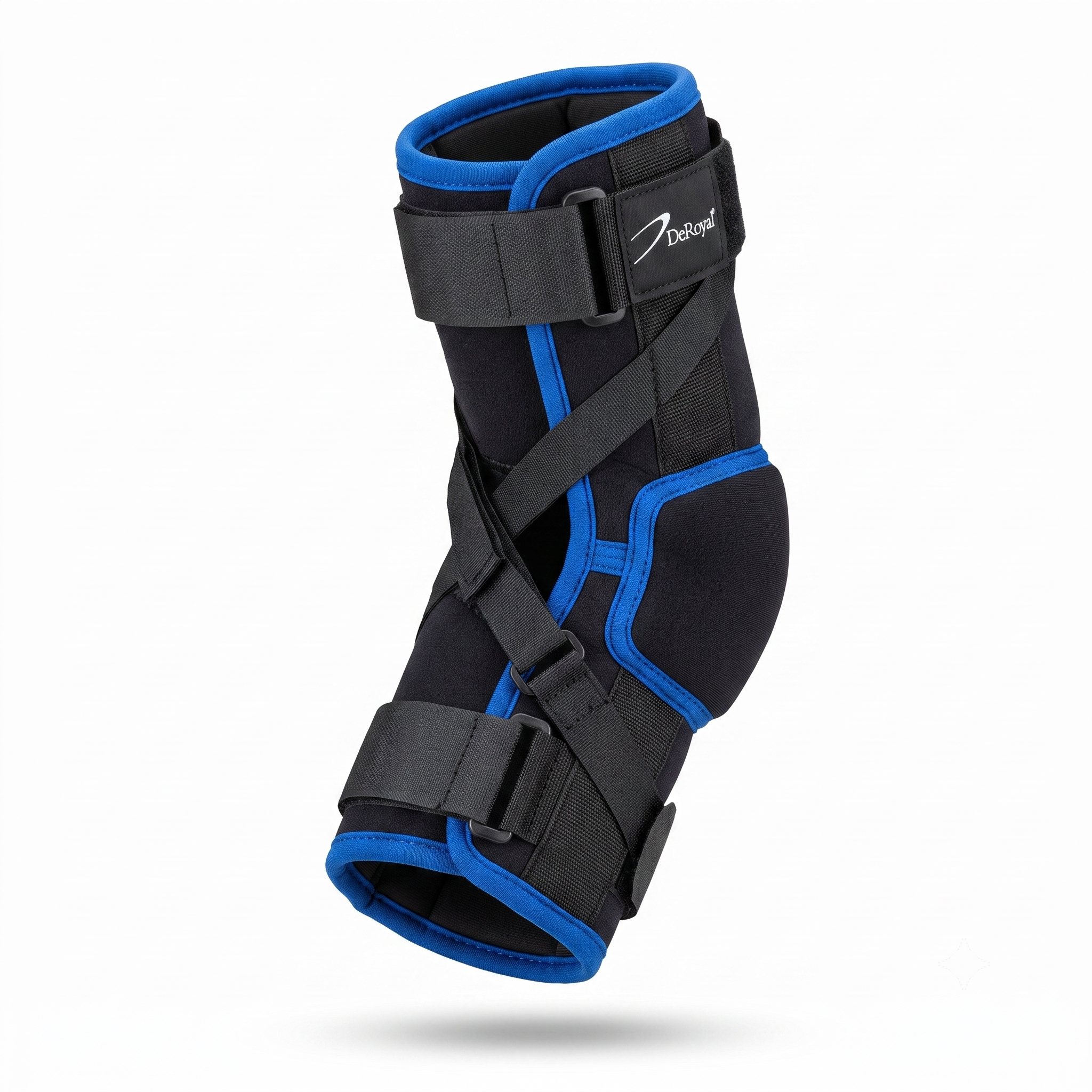

Throwing and contact athletes can injure the elbow's ulnar collateral ligament and other stabilizing structures. A brace cannot diagnose the injury or replace a rehabilitation plan. Read the AAOS guide to elbow injuries in throwing athletes.
Where Compression Elbow Supports Fit
A flexible compression sleeve or wrap may provide warmth, light compression and general protection for a diagnosed mild sprain, chronic inflammation or activity-related discomfort. It does not hold a fracture still and does not prevent the elbow from moving beyond a programmed ROM setting.
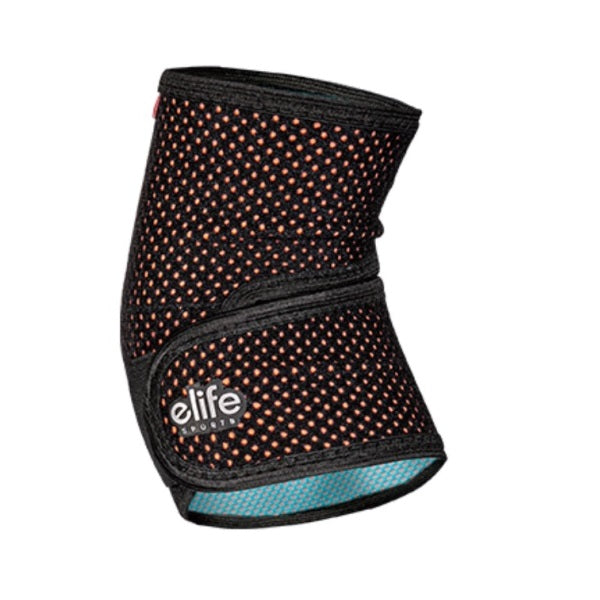
The eLife Cool-Fit Elbow Compression Support uses a lightweight breathable fabric and adjustable closure for general support. It belongs in a different support category from a posterior splint, post-op ROM brace or rigid hyperextension brace.
Which Device May Be Considered by Injury or Recovery Stage?
| Situation | Device a Clinician May Consider | Primary Goal |
|---|---|---|
| Acute fracture or dislocation | Posterior long arm splint | Protect alignment and reduce elbow movement while swelling and stability are assessed |
| Early post-operative protection | Splint or locked post-op brace | Protect the repair in a prescribed position |
| Progressive post-op rehabilitation | Hinged ROM elbow brace | Permit a controlled arc while blocking unsafe motion |
| Ligament instability or hyperextension risk | Functional hyperextension brace | Resist backward bending and selected rotational stress during cleared activity |
| Mild diagnosed sprain or chronic inflammation | Compression sleeve or wrap | Provide light support, warmth and compression |
How to Fit a Hinged Elbow ROM Brace
Always use the exact product instructions and the clinician's prescribed settings. These general checks help identify common fitting errors.
- Confirm the prescribed brace and settings. Verify the correct side, model, brace length and clinician-prescribed flexion, extension or lock settings before application. Do not select settings based on comfort alone.
- Align the hinge with the elbow joint. Position the mechanical hinge at the center of the elbow joint, near the lateral epicondyle. Incorrect hinge alignment can cause migration, pressure and inaccurate motion control.
- Adjust the upper-arm and forearm sections. Set telescoping paddles or brace length so the cuffs support the upper arm and forearm without pressing into the armpit, wrist or surgical incision.
- Fasten straps in the manufacturer's sequence. Secure each strap snugly in the numbered or specified order. The brace should remain stable without causing excessive compression, numbness, color change or increasing swelling.
- Recheck motion, circulation and comfort. Confirm that the brace permits only the prescribed motion. Check hand color, warmth, sensation and finger movement, and contact the treating office if the brace slips, the settings change or concerning symptoms develop.
Common Fitting Problems
Hinge below or above the joint
Misalignment can cause pressure, brace migration and inaccurate motion control.
Brace too long
Upper or lower sections should not press into the armpit, wrist or hand.
Straps overtightened
Excessive compression can cause numbness, swelling, color change or skin injury.
Stops changed accidentally
Check the hinge after dressing, sleeping and activity. Contact the treating office if settings will not stay secure.
Shop Elbow Splints and Braces
Posterior Long Arm Elbow Splint Kit
Professional pre-padded fiberglass splint material, bandages and padding for selected elbow fractures, dislocations and post-operative immobilization.
View Splint Kit
Ossur Rebound Post-Op Elbow Brace
Adjustable post-operative ROM brace with telescoping paddles, moldable cuffs and a drop-lock hinge.
View Ossur Rebound
DeRoyal Warrior Post-Op Elbow Brace
A long adjustable hinged orthosis with controlled flexion and extension settings and an included shoulder strap.
View DeRoyal Warrior
DeRoyal Hypercontrol Elbow Brace
Functional dual-hinge protection for selected hyperextension, instability and approved return-to-sport applications.
View Hypercontrol
eLife Cool-Fit Elbow Support
A lightweight adjustable compression wrap for general protection and diagnosed mild elbow conditions.
View Compression SupportBrowse the complete OrthoTape elbow brace and support collection, shop products organized for elbow and arm fractures or sprains, or review professional fiberglass splint kits.
Frequently Asked Questions
What is the main difference between an elbow splint and a hinged elbow brace?
A posterior long arm splint is designed to keep the elbow relatively still during acute protection. A hinged elbow brace uses mechanical hinges and prescribed stops to allow, block or progressively increase selected flexion and extension during recovery.
When is a posterior long arm splint used?
A clinician may use a posterior long arm splint for selected elbow fractures, elbow dislocations, severe sprains and immediate post-operative protection. The injury must be evaluated and the elbow positioned by a qualified medical professional.
When is a post-operative ROM elbow brace used?
A post-operative range-of-motion brace may be prescribed when the elbow needs protection but the surgeon or therapist also wants controlled movement. The hinge stops can limit how far the elbow bends or straightens as healing progresses.
Can I change the ROM settings on my elbow brace myself?
No. Flexion stops, extension stops and lock settings should be changed only according to the treating surgeon's, physician's or therapist's instructions. Increasing motion too soon can place healing bone, ligament or tendon tissue at risk.
Is a hyperextension elbow brace the same as a post-op ROM brace?
No. A hyperextension brace is generally a lower-profile functional brace intended to resist the elbow bending backward too far during approved activity. A post-operative ROM brace is longer and designed for clinician-controlled rehabilitation after surgery, fracture or major instability.
Can a compression elbow sleeve replace a splint or hinged brace?
No. A compression sleeve can provide light support, warmth and compression, but it does not provide the rigid immobilization of a long arm splint or the mechanical range-of-motion control of a hinged brace.
Why does my hinged elbow brace slide down?
Migration can occur when the brace length is incorrect, straps are loose, cuffs are misaligned, swelling changes or the hinge is not centered at the elbow joint. Recheck the manufacturer's fitting instructions and contact the treating office if the brace will not remain positioned.
What warning signs require prompt medical attention?
Seek prompt medical care for increasing pain or pressure, new numbness or tingling, a cold or discolored hand, rapidly increasing swelling, severe deformity, an open wound, loss of finger movement or a brace or splint that feels dangerously tight.
Clinical References
- American Academy of Orthopaedic Surgeons: Elbow Dislocation
- American Academy of Orthopaedic Surgeons: Elbow Olecranon Fractures
- American Academy of Orthopaedic Surgeons: Radial Head Fractures of the Elbow
- American Academy of Orthopaedic Surgeons: Elbow Injuries in the Throwing Athlete
- American Academy of Orthopaedic Surgeons: Care of Casts and Splints