Elbow hyperextension happens when the elbow is pushed beyond its usual straightened range. A fall, collision, or forceful movement can stretch the joint capsule or ligaments. Some people have naturally greater elbow flexibility without an injury; new pain, swelling, or instability after a forceful movement is different and deserves attention.
Quick answer: A hyperextended elbow may cause pain, swelling, tenderness, bruising, limited movement, or a feeling that the joint is loose. Treatment depends on whether the injury is a mild soft-tissue sprain or something more serious, such as a ligament tear, fracture, or dislocation. A brace may help protect selected injuries, but the appropriate type depends on the diagnosis and the movement that needs to be controlled.
What Is Elbow Hyperextension?
The elbow is a hinge-like joint connecting the upper arm to the forearm. Its ligaments and capsule help keep it stable. Hyperextension occurs when an external force drives the elbow farther backward than its normal comfortable range. The injury can range from irritation or stretching of soft tissue to damage involving ligaments, cartilage, or bone.
What Causes a Hyperextended Elbow?
- Falls onto an outstretched hand: A landing force can travel up the arm and abruptly push the elbow backward.
- Contact sports: Football, wrestling, and basketball can expose the arm to sudden impact or awkward leverage.
- Gymnastics and weight-bearing activities: An elbow loaded near full extension can be injured by excess force.
- Accidental forced extension: A collision or unexpected pull can move the elbow beyond its usual range.
Recurrent elbow looseness is not necessarily the same as a new hyperextension sprain. If the joint repeatedly catches, shifts, or feels unstable, a clinician may evaluate the ligaments and other structures that support it.
Symptoms of Elbow Hyperextension
Symptoms vary with the amount of force and the tissues affected. A hyperextension injury can involve:
- Pain at the back, inside, or outside of the elbow
- Swelling, tenderness, or bruising around the joint
- Discomfort when straightening, bending, or supporting weight through the arm
- Difficulty moving the elbow normally
- A popping sensation at the time of injury or a feeling that the elbow may give way
Symptoms cannot reliably identify the exact injury. A fracture, dislocation, ligament injury, and soft-tissue sprain may share symptoms. A clinician may examine joint stability and use imaging when indicated. Persistent pain, increasing swelling, or a slipping sensation also warrants assessment.
Elbow Hyperextension Treatment and Recovery
There is no single treatment plan for every hyperextended elbow. Initial management generally focuses on protecting the joint and avoiding the movement that caused pain until a more serious injury has been ruled out.
What to Do After Hyperextending Your Elbow
- Stop the provoking activity. Avoid forcing the elbow straight or testing its limits repeatedly.
- Support the arm comfortably. Temporary protection may be appropriate while arranging an assessment; do not improvise a rigid brace for a visibly deformed joint.
- Address swelling as advised. Cold packs wrapped in cloth, relative rest, and appropriate elevation may help with discomfort. Follow individualized medical advice.
- Arrange evaluation when needed. Pain that persists, instability, reduced motion, or concerning symptoms should be evaluated to identify whether a sprain, fracture, or ligament injury is present.
- Return to movement under guidance. Once the injury has been assessed, a clinician or therapist may recommend a gradual return to motion to avoid unnecessary stiffness.
How Long Does a Hyperextended Elbow Take to Heal?
Recovery depends on what was injured. A mild elbow sprain may improve over several weeks; a significant ligament tear, dislocation, fracture, or postoperative injury can require a longer and more structured recovery. Pain improving does not necessarily mean the joint is ready for contact sports or heavy loading. Avoid relying on one universal recovery-time estimate.
For a more detailed discussion of ligament injuries, see our elbow sprain and arm injury guide.
Do You Need an Elbow Brace for Hyperextension?
Not every hyperextended elbow needs a brace. When bracing is appropriate, the useful question is what movement must be limited? A soft compression sleeve, a functional hyperextension brace, and a postoperative range-of-motion (ROM) brace do different jobs.
| Support type | What it does | When it may be considered |
|---|---|---|
| Functional hyperextension brace | Hinges and support straps help resist unwanted backward bending while allowing functional movement. | Selected ligament or hyperextension problems when a clinician recommends functional support. |
| Post-op hinged ROM brace | Adjustable hinges limit bending or straightening to a prescribed range. | After significant injury or surgery when motion needs clinician-controlled restriction. |
| Compression sleeve or soft wrap | Provides light compression or comfort, but does not provide the mechanical extension control of a rigid hinged brace. | Selected minor symptoms, when substantial motion restriction is not required. |
| Rigid splint | Restricts movement more substantially. | Acute or unstable injuries when a clinician determines immobilization is needed. |
For a deeper comparison of splints, hinged braces, and recovery stages, read Elbow Splint vs. Hinged Elbow Brace. That existing guide covers the broader equipment decision; this page focuses specifically on elbow hyperextension.
Two Different Bracing Options at OrthoTape

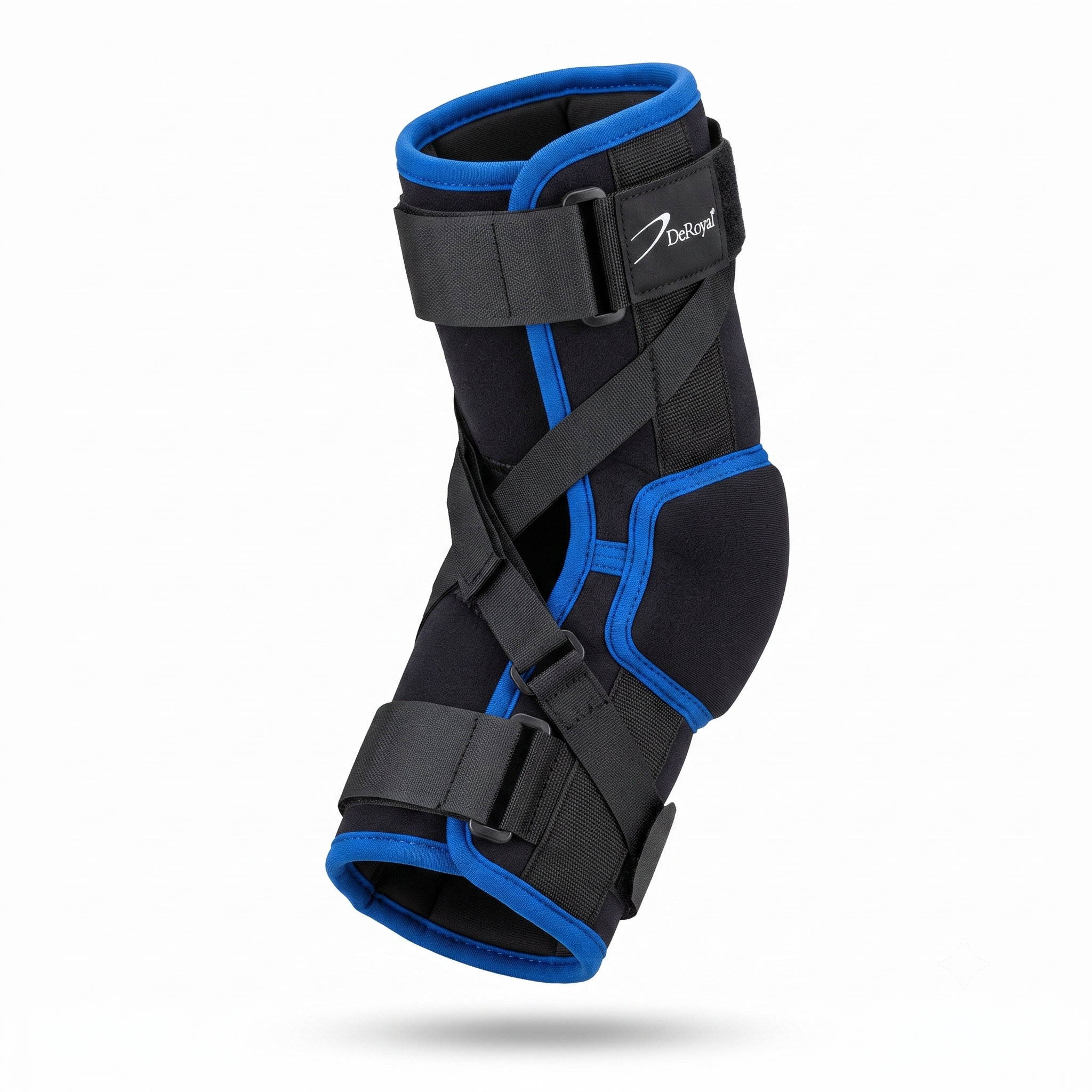
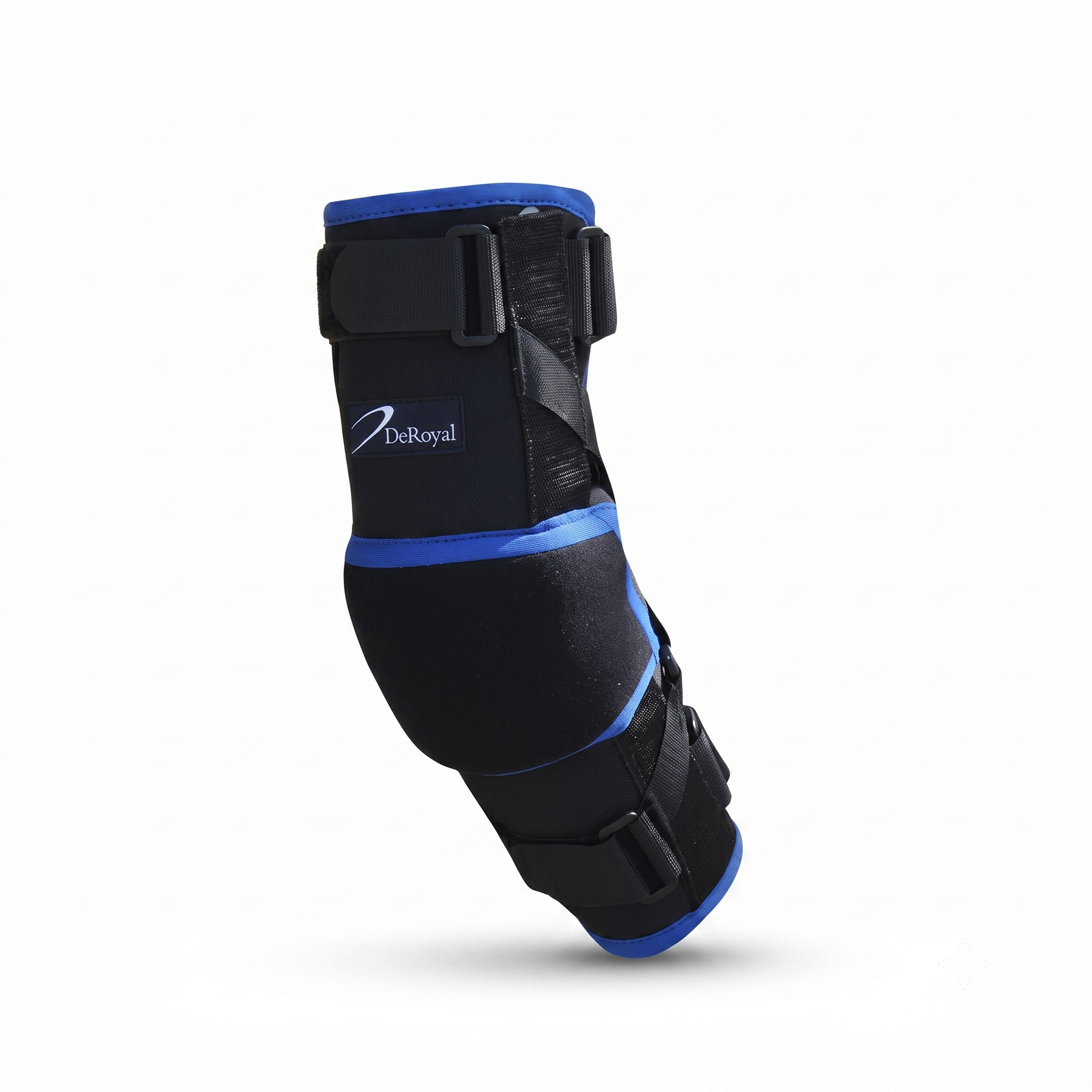
DeRoyal Hypercontrol Elbow Brace
Functional hyperextension support: DeRoyal specifies medial and lateral hinges, criss-cross straps, and an elbow pad. Its listed indications include elbow hyperextension, ligament instability, and UCL sprains.
- Designed to help control excessive elbow extension
- Six sizes based on largest forearm circumference
- Appropriate for selected sports-related needs when medically cleared

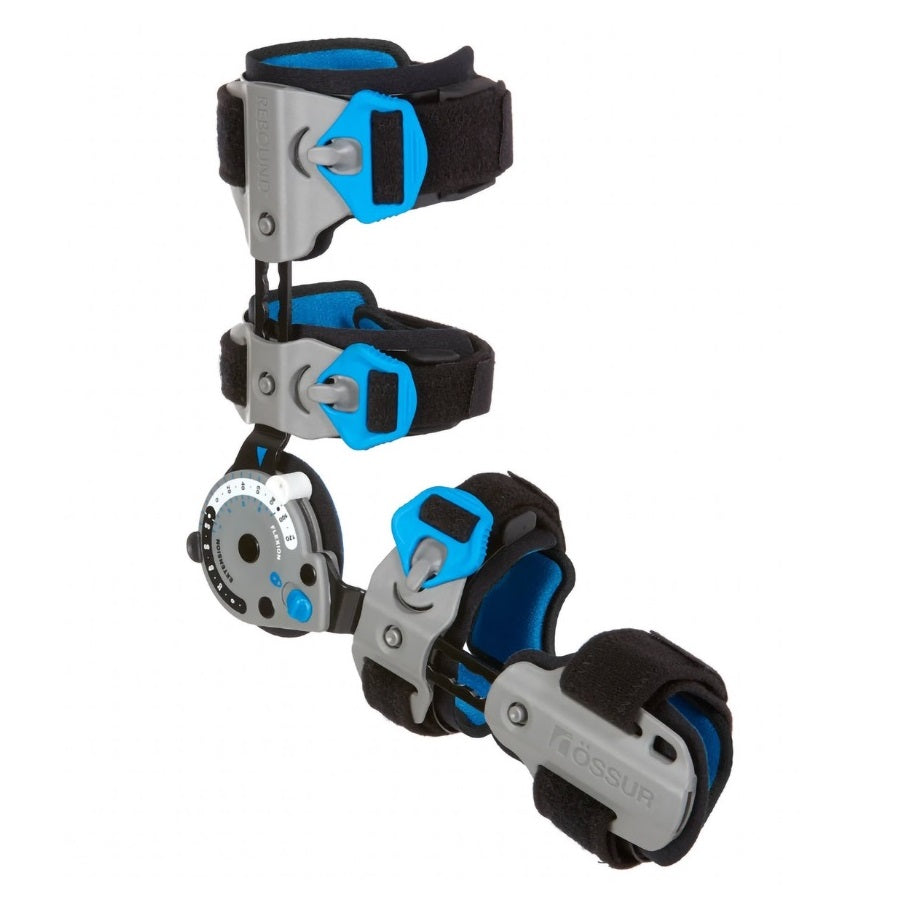
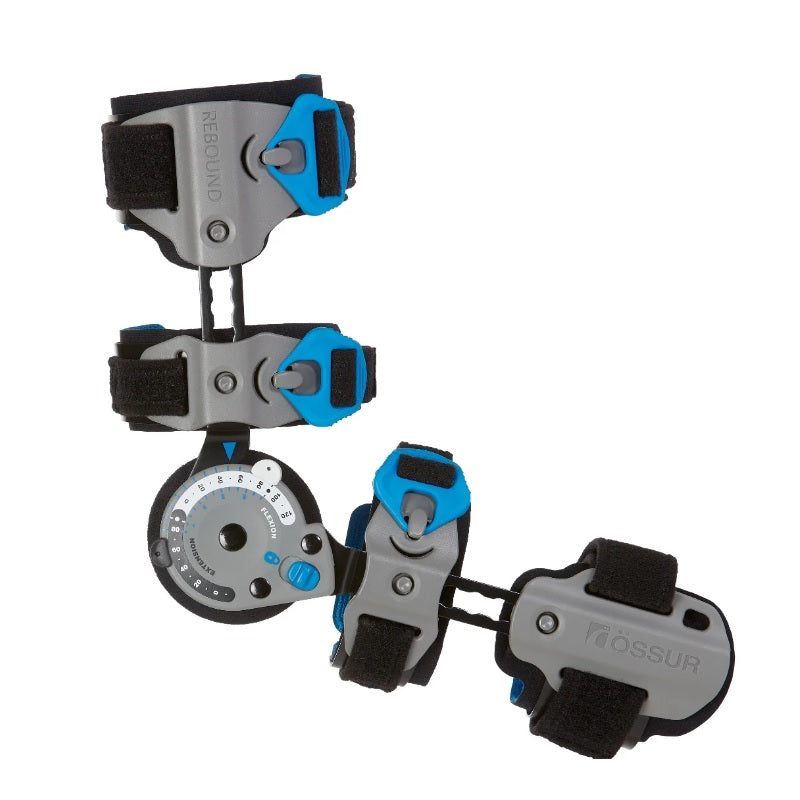
Ossur Rebound Post-Op Elbow Brace
Clinician-directed ROM control: The adjustable drop-lock hinge allows movement restrictions to be prescribed during rehabilitation. This is not an interchangeable replacement for a low-profile sports brace.
- Adjustable motion limits for post-traumatic or post-surgical care
- Universal sizing with separate left and right configurations
- Fitting and ROM settings should be directed by a healthcare professional
Elbow Hyperextension in Football, Wrestling, Gymnastics, and Other Sports
Sport changes how force reaches the elbow. Football contact, wrestling holds, gymnastics landings, and other athletic movements can expose a straightened arm to sudden stress. A properly selected functional brace may be considered for support during an approved return to activity, but it cannot make an injured or unstable joint safe for contact on its own.
Do not select a brace based only on the sport. A person with a healing ligament injury may need a different level of control than someone recovering from elbow surgery. Clearance, fit, range-of-motion restrictions, and sport-specific rules should come from the treating professional.
Frequently Asked Questions
How do I know if I hyperextended my elbow?
A forceful backward movement followed by pain, swelling, tenderness, or loss of motion may suggest a hyperextension injury. Symptoms alone cannot show whether ligaments, bones, or other structures were damaged; seek an assessment if symptoms are significant or persist.
Can a hyperextended elbow heal without a brace?
Some minor soft-tissue injuries improve with protection and an appropriate recovery plan without a specialized brace. A clinician should determine whether instability, a fracture, or another injury requires bracing or immobilization.
Is a compression sleeve enough to stop elbow hyperextension?
No. A soft sleeve may provide compression or comfort, but it is not equivalent to the mechanical support from a properly fitted hinged hyperextension brace.
What is the difference between a hyperextension brace and an elbow ROM brace?
A functional hyperextension brace is intended to help resist unwanted backward bending during selected activities. A post-op ROM brace provides adjustable motion limits determined by a healthcare professional during recovery.
Can I return to football or wrestling with an elbow brace?
A brace is not permission to return before healing. Readiness depends on the actual injury, stability, strength, range of motion, professional clearance, and the rules of the sport.
How long does an elbow hyperextension injury take to recover?
Recovery varies from several weeks for some mild sprains to substantially longer for severe ligament injuries, fractures, or surgery. An individualized assessment is more useful than a universal timetable.
Related Elbow Injury and Bracing Resources
- Elbow Sprains, Ligament Injuries, and Arm Fractures — injury types and support decisions.
- Elbow Splint vs. Hinged Brace — understanding immobilization and controlled motion.
- All Elbow Braces and Supports — browse the full range of elbow support products.
Medical and Manufacturer Sources
- UTHealth Houston McGovern Medical School — Hyperextension Injury of the Elbow
- MedlinePlus — Elbow Sprain Aftercare
- American Academy of Orthopaedic Surgeons — Elbow Dislocation
- DeRoyal — Hypercontrol Elbow Brace
- Ossur — Rebound Post-Op Elbow Brace
Educational information only: This guide is not a diagnosis, treatment prescription, or substitute for medical examination. Bracing and activity restrictions should match the diagnosed injury and the treating clinician's instructions.