
Works as anticipated, good product that solves many problems.
Easy process to order efficient shipping ,good communication .
High quality knee brace.
Great service, quick delivery. Allowed me to stay in water on family summer vacation.
USA-based company since 2005
Use this bar to show information about your cookie policy.
6 products
Showing 1 - 6 of 6 products
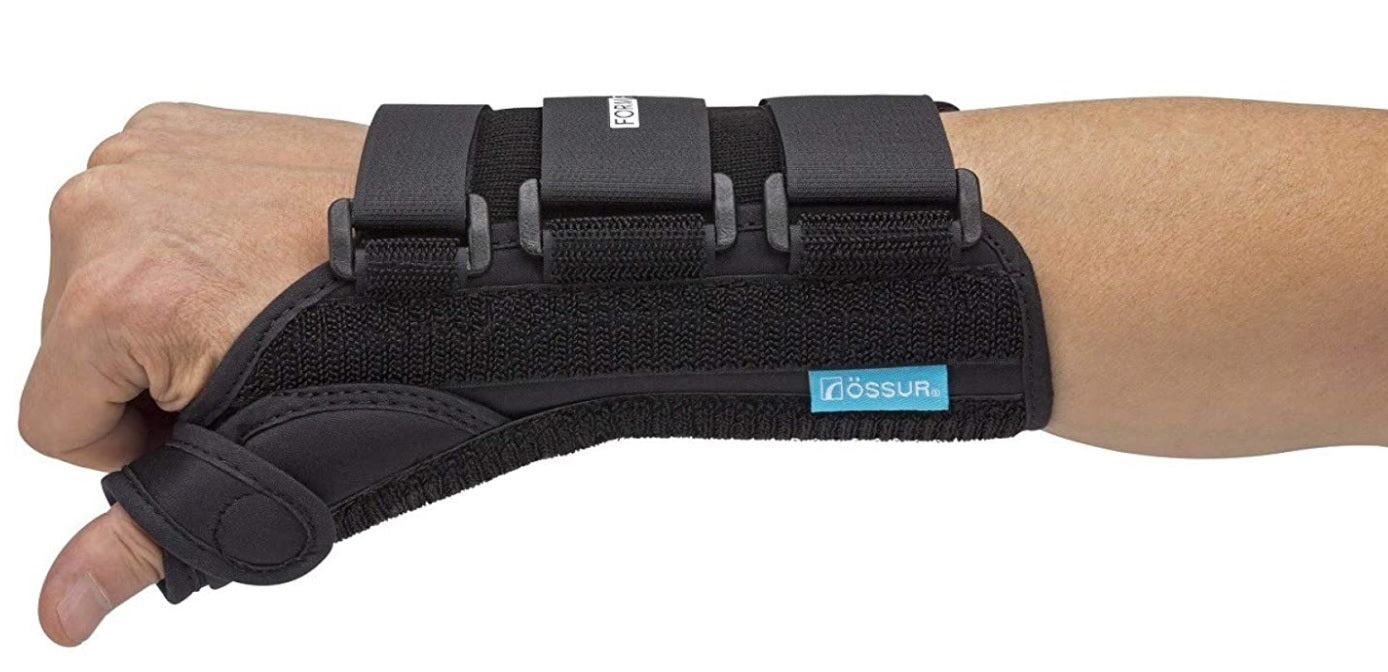
A thumb spica splint supports the thumb and wrist while leaving the other fingers free. Soft and semi-rigid braces are commonly used for daily support, while rigid Exos braces and fiberglass splints provide greater immobilization for clinician-directed fracture or postoperative care.
OrthoTape offers thumb spica braces from Ossur, Exos, and eLife, plus a professional fiberglass thumb spica splint kit. Compare rigidity, forearm length, side, sizing method, and water-care instructions before selecting a device.
A thumb injury can involve a tendon, ligament, joint, carpal bone, or thumb fracture. Seek medical evaluation for trauma, deformity, marked swelling, loss of pinch strength, numbness, or pain in the anatomical snuffbox near the base of the thumb. Rigid fracture braces and fiberglass splints should be selected and fitted by a qualified healthcare professional.
A thumb spica splint limits motion at the thumb and radial side of the wrist. The exact joints controlled depend on the brace length, thumb design, stays, and molding.
A splint does not confirm the diagnosis. Suspected scaphoid fractures and unstable thumb ligament injuries can require imaging, specialist care, or surgery.
Soft and semi-rigid braces are generally easier to wear during routine activities. They use fabric, straps, and moldable stays to limit motion without forming a hard circumferential shell.
Exos fracture braces use a rigid thermoformable shell and BOA closure. A qualified healthcare professional should heat, mold, fit, and adjust these devices for fracture or postoperative use.
Exos brace materials are waterproof and radiolucent. Water exposure, brace removal, and repeat molding must still follow clinician and manufacturer instructions.
The Thumb Spica Fiberglass Splint Kit supplies pre-padded fiberglass splinting material and supporting application supplies. It is intended for trained professional application when a traditional rigid thumb spica splint is prescribed.
| Option | Common Selection Goal | Rigidity | Key Consideration |
|---|---|---|---|
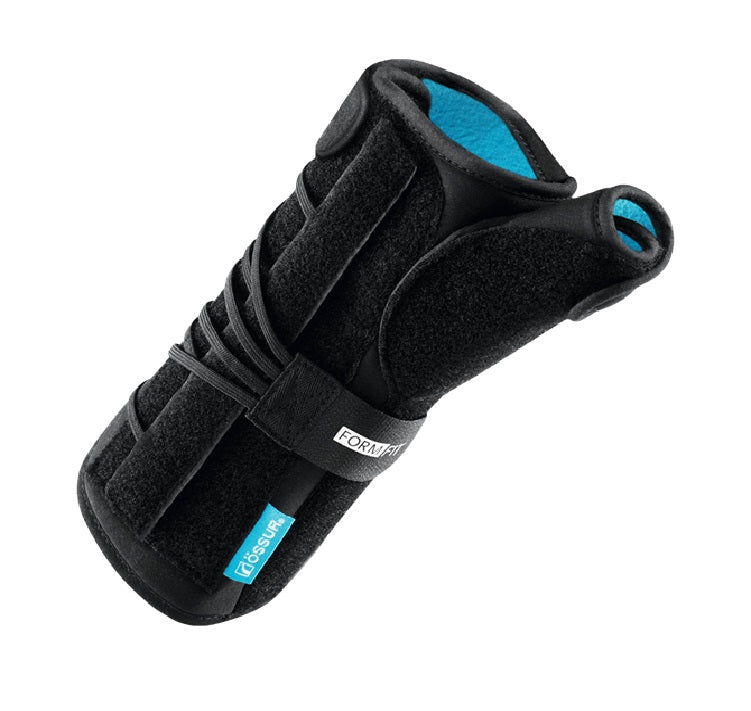
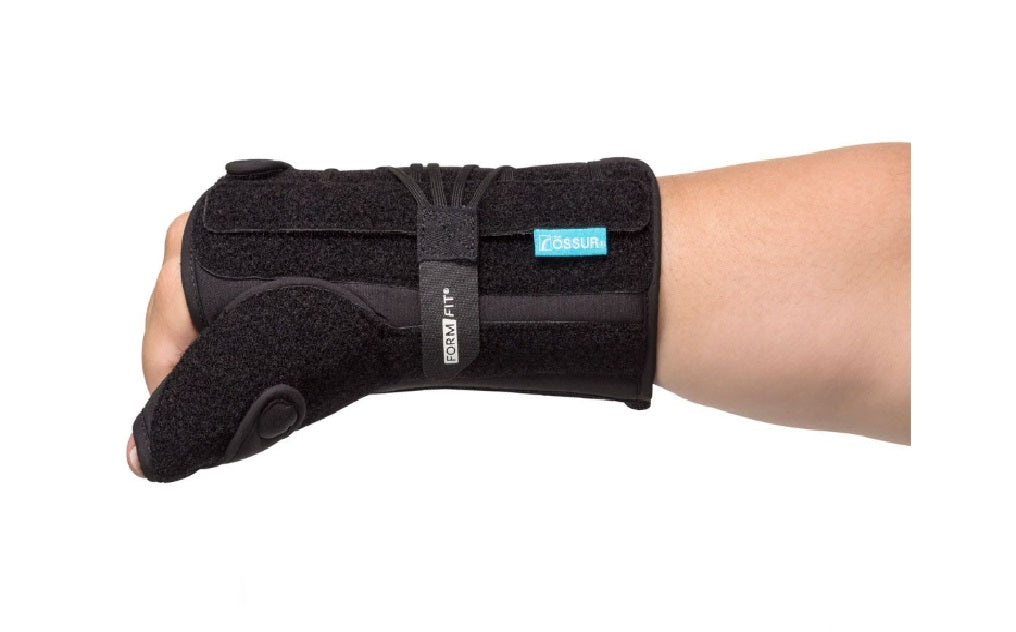
| Ossur Formfit Sized | Daily support with a more specific fit | Soft to semi-rigid | Choose side and wrist size |
| Ossur Formfit Universal | Simplified sizing and post-cast support | Soft to semi-rigid | Confirm side and fit category |
| eLife Q-Fit with BOA | Adjustable wrist and thumb support | Semi-rigid | Micro-adjustable dial closure |
| Exos Thumb Spica | Clinician-directed rigid fracture support | Rigid thermoformable | Professional molding and fitting |
| Exos Long Thumb Spica II | Greater wrist and forearm control | Rigid thermoformable | Longer and more restrictive |
| Fiberglass Splint Kit | Traditional professional splinting | Rigid fiberglass | Professional application required |
Short thumb spica braces focus support around the thumb and wrist. They are less bulky and may be easier to use during daily activities.
Long thumb spica braces extend farther up the forearm. They limit more wrist and forearm motion and may be selected when the treatment plan requires greater proximal control.
Longer is not automatically better. Extra immobilization can increase bulk and stiffness. Follow the prescribed brace length for the specific injury.
Do not transfer a size from one brand to another. Each manufacturer uses its own measurement range and brace geometry.
Seek prompt evaluation after a fall or direct blow, or when the thumb looks deformed, feels unstable, cannot pinch, becomes numb, or develops severe swelling. Pain in the anatomical snuffbox can indicate a scaphoid fracture that may not appear on the first X-ray.
A thumb spica splint supports the wrist and thumb while leaving the other fingers available. Coverage varies by design. Some models mainly control the thumb and wrist, while longer models extend farther up the forearm.
Thumb spica splints are commonly used for selected thumb sprains, De Quervain's tenosynovitis, thumb CMC arthritis, suspected or confirmed scaphoid injuries, thumb ulnar collateral ligament injuries, selected thumb fractures, and clinician-directed postoperative support. The correct device depends on the diagnosis and required level of immobilization.
A standard wrist brace mainly limits wrist motion. A thumb spica splint also supports or immobilizes the thumb, including the CMC and MCP region, depending on the design. A wrist-only brace may not provide enough thumb control for a scaphoid injury or thumb ligament injury.
A thumb spica splint is usually removable or secured with wraps or straps. A thumb spica cast is circumferential and normally requires professional application and removal. Splints can accommodate swelling more easily, while casts provide more consistent non-removable immobilization.
A removable thumb spica brace that keeps the wrist neutral and limits painful thumb motion is commonly considered for De Quervain's tenosynovitis. The best rigidity and wear schedule depend on symptom severity, fit, and clinician guidance. A soft or semi-rigid brace is usually more practical for daily wear than a rigid fracture brace.
A clinician may use a thumb spica splint, thumb spica cast, or rigid fracture brace for a suspected or confirmed scaphoid fracture. The choice depends on fracture location, stability, imaging, swelling, and whether surgery is required. A suspected scaphoid fracture should be medically evaluated even when the first X-ray is negative.
The splint should feel secure without causing numbness, tingling, color change, cold fingers, increasing swelling, or worsening pain. Straps should not create pressure points. Loosen the brace and contact the treating clinician if circulation or nerve symptoms develop.
Wear a thumb spica splint during sleep only when the clinician or product instructions recommend it. Night wear is sometimes used for De Quervain's or arthritis, but fracture and postoperative schedules vary. Confirm that the brace is not too tight before sleeping.
Exos brace materials are waterproof, but showering or swimming should follow the treating clinician's instructions. If water exposure is permitted, dry the skin and brace completely and follow the product care directions. Do not loosen or remove a fracture brace unless authorized.
A short thumb spica focuses on the thumb and wrist with less forearm coverage. A long thumb spica extends farther up the forearm and limits more wrist and forearm motion. The long version is more restrictive and may be selected when greater proximal control is required.
Use the sizing method shown on the specific product page. Confirm left or right side, measure the required wrist or hand circumference, and compare the measurement with that manufacturer's chart. Do not assume sizes transfer between Ossur, Exos, eLife, and fiberglass splint kits.
OrthoTape.com has supplied orthopedic braces and casting materials since 2005. This guide combines verified manufacturer information with reputable orthopedic references. It is educational and does not replace diagnosis or fitting instructions from a qualified healthcare professional. Last reviewed July 27, 2026.


Works as anticipated, good product that solves many problems.
Easy process to order efficient shipping ,good communication .
High quality knee brace.
Great service, quick delivery. Allowed me to stay in water on family summer vacation.
Sizing was not accurate