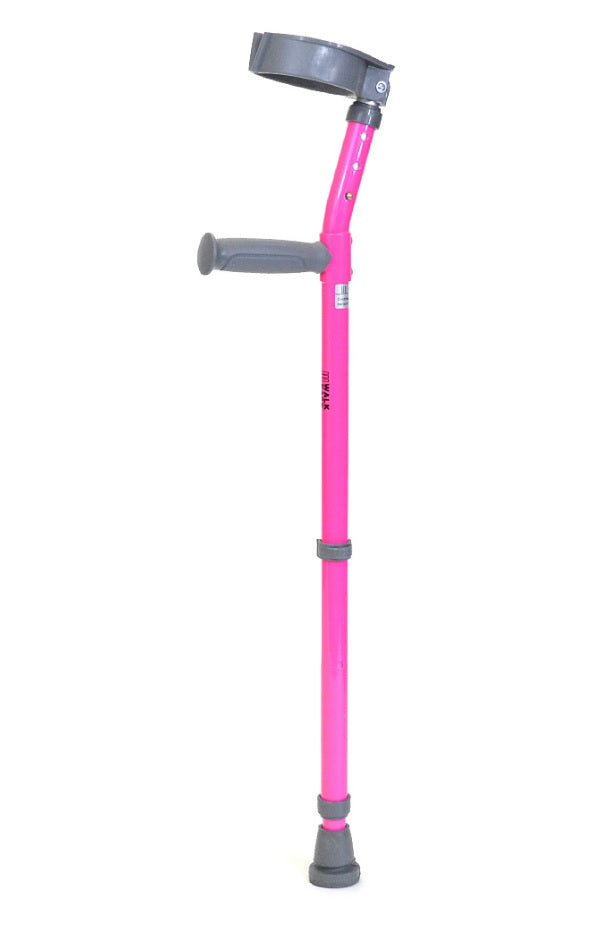
Walk Easy Model 582 Youth Forearm Crutches — 3½" Full Cuff
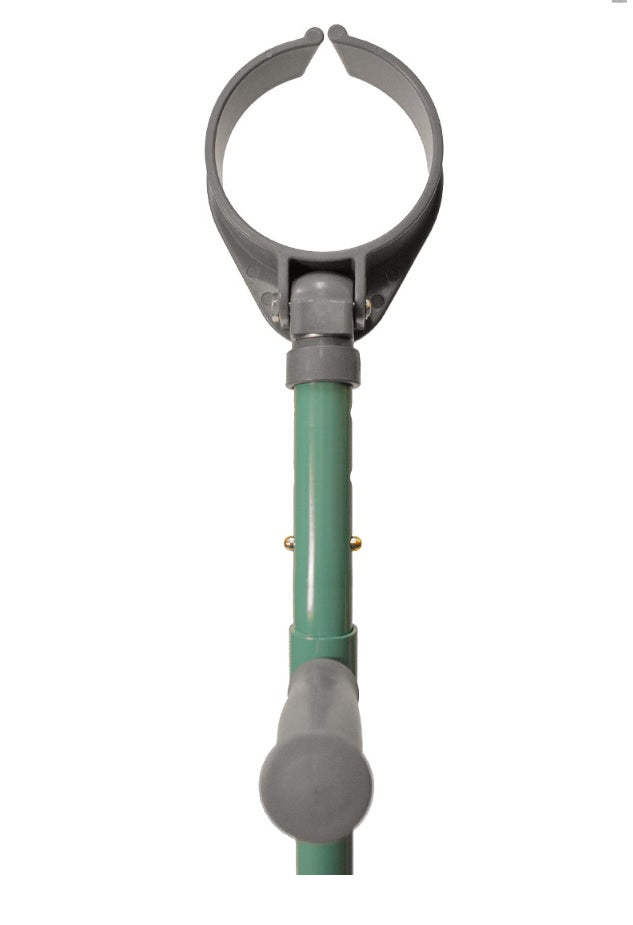
The Walk Easy Model 582 is a youth forearm crutch featuring a 3½-inch full cuff sized for children and teenagers who need maximum forearm support. The full cuff fully encircles the forearm for a secure, stable fit — preferred for pediatric users with neurological conditions or those who need greater forearm contact during ambulation.
Key Features
-
Youth sizing — proportioned for children and teenagers
-
3½" full cuff — fully encircles the forearm for maximum support
- Lightweight aluminum frame
- Push-button height adjustment
- Sold as a pair
-
Brand: Walk Easy
Indications
- Pediatric neurological conditions (cerebral palsy, spina bifida, MS)
- Children needing maximum forearm support during ambulation
- Pediatric post-surgical recovery
- Long-term pediatric mobility support
Frequently Asked Questions
What is the difference between a half cuff and a full cuff forearm crutch?
A half cuff has an open back, allowing the arm to slip in and out easily without releasing the grip — preferred for users who frequently sit and stand. A full cuff fully encircles the forearm, providing greater support and security — preferred for users with neurological conditions or those who need maximum forearm contact during ambulation. The Model 582 uses a full cuff for maximum pediatric support.
What conditions require forearm crutches in children?
Children commonly use forearm crutches for conditions including cerebral palsy, spina bifida, muscular dystrophy, post-surgical recovery (hip, knee, ankle, or foot surgery), and fractures requiring non-weight-bearing or partial weight-bearing ambulation. A physician or physical therapist should determine the appropriate crutch type and gait pattern for each child.
How do I size forearm crutches for a child?
Proper sizing is critical for safe crutch use. When standing upright with the crutch tip 2 inches to the side and 6 inches in front of the foot, the handgrip should be at wrist level (with the arm hanging naturally), and the forearm cuff should sit 1–2 inches below the elbow. Walk Easy youth crutches have push-button height adjustment to accommodate growing children. Always have a physical therapist confirm fit before use.
How long does a child typically use forearm crutches after surgery?
Duration depends on the procedure and the child's recovery. After lower extremity surgery (fracture repair, osteotomy, tendon lengthening), children may use forearm crutches for 4–12 weeks or longer. Children with neurological conditions may use forearm crutches long-term as a permanent mobility aid. A pediatric orthopedic surgeon or physical therapist will establish the specific weight-bearing and weaning timeline.
Are forearm crutches FSA or HSA eligible?
Yes — forearm crutches are generally FSA and HSA eligible as a qualified medical expense when prescribed or recommended by a physician. We recommend retaining your prescription or physician's recommendation for your FSA/HSA records.
OrthoTape is an authorized Walk Easy dealer. FSA/HSA eligible when prescribed by a physician. This content is for informational purposes only and does not constitute medical advice.