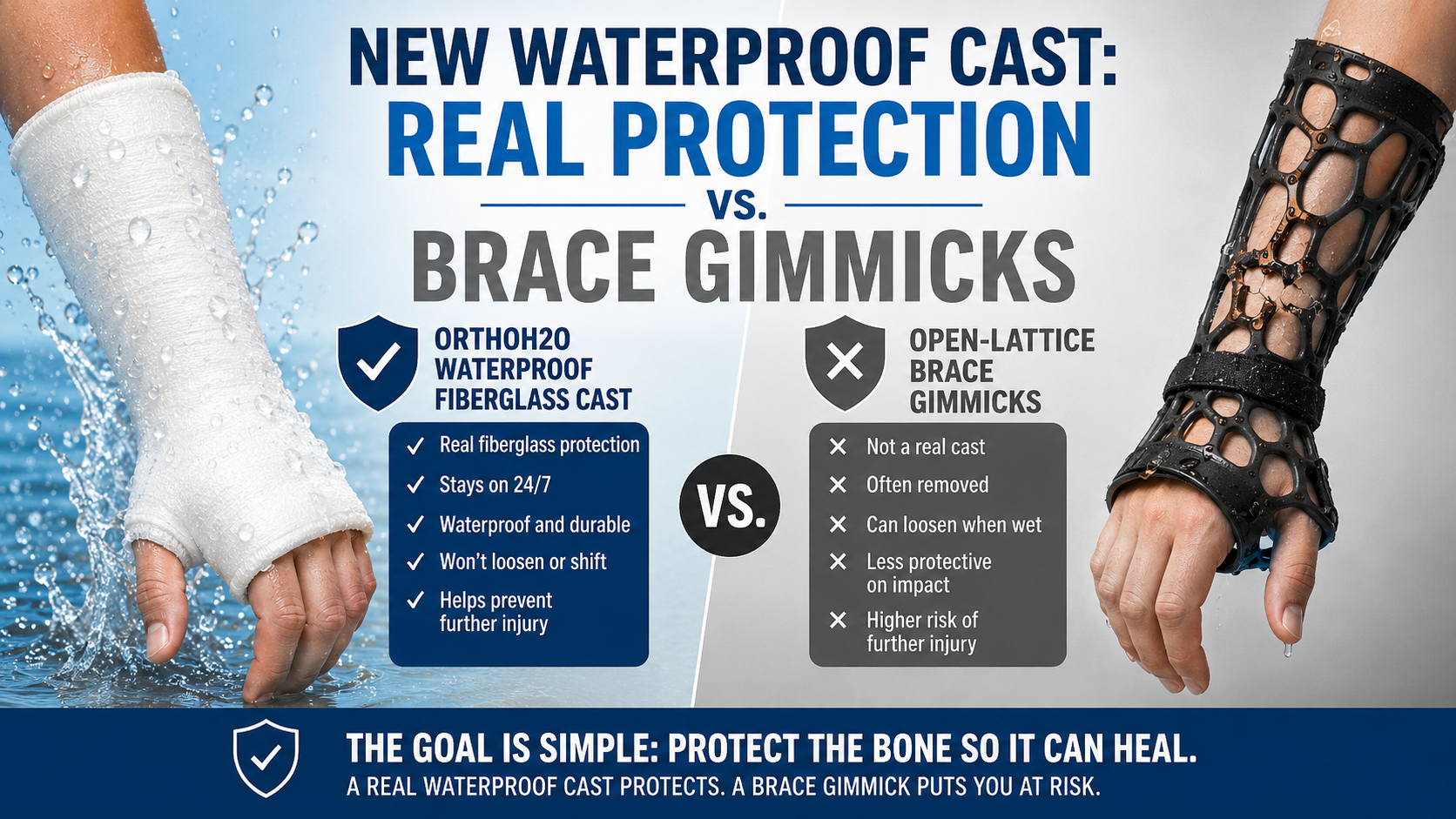
Not every “new waterproof cast” is actually an upgrade.
Some products are marketed as modern waterproof cast alternatives. They look breathable. They look clean. They look easy to apply. They may even be promoted as the future of fracture care.
But patients should ask a harder question:
Will this actually protect my broken arm or leg from moving, shifting, or breaking worse?
That is the question that matters. A broken bone does not heal because a device looks modern. It heals when the bone is properly aligned, protected, immobilized, and monitored during recovery.
A real fiberglass cast is rigid, custom-molded, and designed to immobilize the fracture. OrthoH2O does not replace that protection. It works under a real fiberglass cast to make the cast water-friendly.
That is the difference between a true waterproof fiberglass cast system and a waterproof brace gimmick.
What Is a “New Waterproof Cast” Supposed to Do?
A new waterproof cast should not just be about showering, swimming, comfort, or convenience. Those things matter, but they are secondary.
The first job of any fracture device is protection.
Before accepting a brace, boot, open-lattice cast alternative, or removable waterproof device, ask:
- Will this keep the fracture from moving?
- Will this protect the bone if I bump it?
- Will this protect the injury if I trip or fall?
- Will this stay on when I sleep, shower, or forget?
- Will this protect the fracture as well as a properly applied fiberglass cast?
If the answer is unclear, the device may be selling convenience more than protection.
A Cast Is Not Just a Cover. It Is Fracture Protection.
A properly applied fiberglass cast is not a fashion accessory. It is not just a shell. It is a medical immobilization system designed to hold an injured area still while healing occurs.
A fiberglass cast has several advantages that matter clinically:
- Rigid structure to help limit unwanted motion.
- Custom molding to the patient's arm, wrist, ankle, foot, or leg.
- Non-removable protection that does not depend on perfect patient behavior.
- Impact resistance during normal daily recovery activities.
- Consistent immobilization during sleep, walking, sitting, and daily movement.
This is why the basic fiberglass cast still matters. The cast does not rely on the patient remembering to tighten straps, put it back on, or avoid removing it “just for a few minutes.”
The cast stays on. That is part of why it works.
The Problem With Waterproof Brace Gimmicks
Some newer waterproof fracture devices are marketed around the wrong benefits:
- Easy to apply
- Easy to remove
- Breathable
- Waterproof
- No cast saw
- Fast clinic workflow
- Less mess
- More convenient for staff
Those features may sound impressive. But they do not automatically answer the most important fracture question:
Does this protect the broken bone as well as a real fiberglass cast?
A brace-style device can look modern and still fall short if it does not provide enough rigidity, enough impact protection, enough custom fit, or enough real-world immobilization for that specific fracture.
Convenience is not the same as protection.
OrthoH2O Is Different: It Does Not Replace the Cast
OrthoH2O is not a removable cast cover. It is not a brace pretending to be a cast. It is not a waterproof gimmick replacing fiberglass protection.
OrthoH2O is a waterproof cast liner system used underneath standard fiberglass casting tape. When applied correctly by a clinician, OrthoH2O helps create a true waterproof fiberglass cast, commonly called a swim cast.
That distinction is important.
OrthoH2O keeps the hard fiberglass outer shell. It keeps the custom-molded cast structure. It keeps the non-removable immobilization. The waterproof function comes from the liner system underneath the fiberglass cast, not from replacing the cast with a brace-like device.
A true new waterproof cast should still be a real cast.
| Feature | OrthoH2O Waterproof Fiberglass Cast System | Waterproof Brace / Open-Lattice Cast Alternative |
|---|---|---|
| Primary purpose | Waterproof function while preserving real fiberglass cast protection | Often marketed around convenience, breathability, fast application, and comfort |
| Outer structure | Standard rigid fiberglass casting tape | Varies by device; may use open-lattice or brace-style construction |
| Custom molded | Yes, applied as a real fiberglass cast | Varies by product and application method |
| Patient removable | No, not removable by the patient during normal use | Some products emphasize easier removal or lower-removal-equipment workflow |
| Waterproof function | Water drains through the liner under the fiberglass shell | Waterproof feature depends on the device design itself |
| Main concern | Must be applied correctly by a clinician | Patients should ask whether convenience is replacing protection |
Will This Keep My Arm or Leg From Breaking Further?
This is the question patients should ask before accepting any fracture device:
Will this keep my arm or leg from breaking further if real life happens?
Real life is not a controlled product demo. Real patients:
- Bump the cast or brace on furniture.
- Trip while using crutches.
- Sleep in awkward positions.
- Forget instructions.
- Remove braces and boots when uncomfortable.
- Loosen straps.
- Get tired of wearing the device.
- Try to walk “just a few steps.”
If the device only works when the patient behaves perfectly, that is a real weakness.
A fiberglass cast reduces the behavior problem because the patient cannot casually remove it. That is not a flaw. In fracture care, that can be the point.
Removable sounds better until healing depends on not removing it.
Braces and Boots Can Be the Wrong Answer for the Wrong Patient
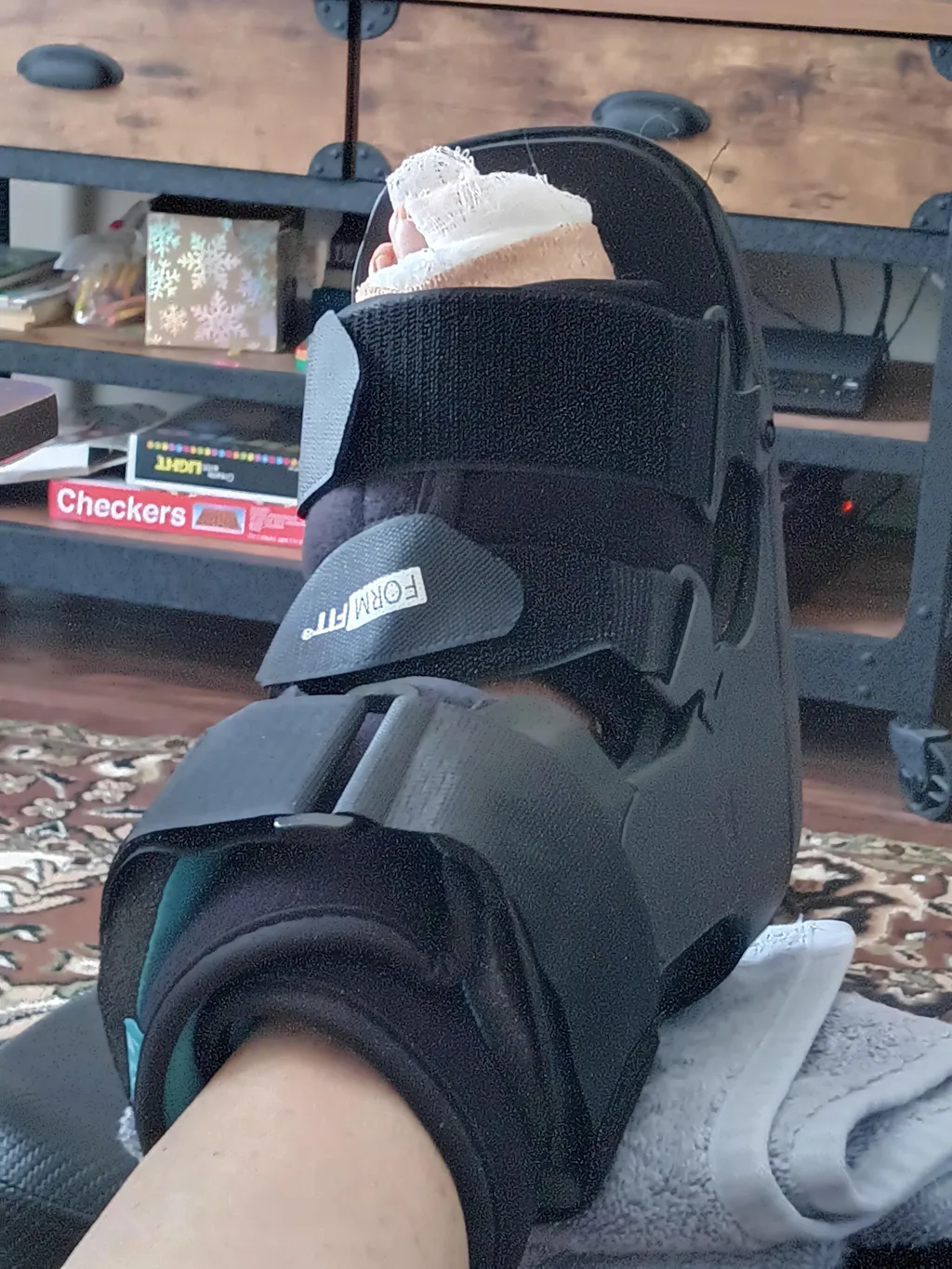
Braces and boots do have a place in orthopedic care. They may be reasonable for some sprains, soft tissue injuries, stable fractures, post-operative protocols, later-stage healing, or situations where swelling and wound access are important.
But they are not automatically better.
A brace or walking boot can become a problem when:
- It does not fit well.
- The patient keeps removing it.
- Straps loosen during the day.
- The device shifts on the limb.
- The patient is a child, older adult, or high fall-risk patient.
- The fracture needs strict immobilization.
- The device is selected for convenience instead of protection.
That is the issue. Not every boot is bad. Not every brace is bad. But when a broken bone needs serious protection, the device must be judged by protection first.
A clunky removable boot or brace may be easier to dispense, but that does not make it better for the fracture.
The Clinic Convenience Problem
Modern orthopedic care is busy. Clinics are under pressure. Devices that are fast, clean, and easy to apply can be attractive to the office.
That does not mean the provider is doing something wrong. But patients should understand the incentive:
- A brace or boot can often be pulled from inventory quickly.
- A removable device may require less casting skill.
- A brace-style product may reduce mess and cleanup.
- A device that is easy to remove may make follow-up easier.
- A product marketed as new and waterproof may be easier to sell to patients.
Those are workflow advantages. They are not automatically fracture-protection advantages.
The system is not neutral. Patients should ask whether the recommendation is being driven by protection, convenience, workflow, billing, or habit.
A Waterproof Cast Should Still Be a Cast
The phrase “new waterproof cast” should not be handed over to every brace-style product with modern marketing.
A real waterproof cast should still do the job of a cast:
- Immobilize the fracture.
- Protect the injured area.
- Stay on during recovery.
- Resist normal bumps and daily activity.
- Maintain alignment after the bone has been reduced or stabilized.
- Allow the clinician to monitor healing with follow-up care.
OrthoH2O was built around that principle. It does not ask the patient to give up fiberglass cast protection just to get water exposure.
It keeps the cast. It improves the cast.
Questions to Ask Before Accepting a Waterproof Brace or Cast Alternative
Before accepting any “new waterproof cast” alternative, ask your clinician these questions:
- Is this device being used because it protects my fracture better?
- Or is it being used because it is easier, faster, cleaner, or more convenient?
- Is this appropriate for my exact fracture type?
- Has my fracture been reduced or is it at risk of shifting?
- What happens if I bump it, trip, or fall?
- Can I remove or loosen this device?
- Would a fiberglass cast protect this better?
- Can we use a waterproof fiberglass cast system instead?
The best device is not always the newest device. The best device is the one that protects the injury properly.
When OrthoH2O May Make Sense
OrthoH2O may be a good option when a clinician wants the protection of a fiberglass cast while allowing water exposure during recovery.
Common use cases include:
- Waterproof short arm casts
- Waterproof long arm casts
- Waterproof short leg casts
- Waterproof long leg casts
- Swim casts for children
- Shower-friendly fiberglass casts
- Vacation or summer casting situations
- Patients who need a real cast but want easier hygiene
Patients should always confirm with their physician that swimming, showering, or bathing is medically appropriate for their injury and cast type.
To shop OrthoH2O waterproof cast materials and kits, visit the OrthoH2O Waterproof Cast Collection.
OrthoH2O Waterproof Cast Options
- OrthoH2O Waterproof Short Arm Cast Kit — for wrist, hand, and forearm casting.
- OrthoH2O Waterproof Short Leg Cast Kit — for foot, ankle, and below-knee casting.
- OrthoH2O Waterproof Long Arm Cast Kit — for elbow, forearm, wrist, and full-arm casting.
- OrthoH2O Waterproof Long Leg Cast Kit — for thigh-to-foot or full-leg casting applications.
- OrthoH2O Waterproof Cast Stockinette Full Roll — bulk waterproof cast liner for professional use.
Final Takeaway
A new waterproof cast should still be a real cast.
If a device is easy to remove, easy to loosen, brace-like, or sold mainly on convenience, patients should slow down and ask whether it truly protects the fracture.
There is nothing wrong with innovation. But innovation should not mean replacing proven fracture protection with a waterproof brace gimmick.
OrthoH2O is different because it keeps the rigid fiberglass cast structure and adds waterproof function underneath the cast.
That is the message patients need to hear:
Do not trade fracture protection for convenience marketing.
Frequently Asked Questions
Is OrthoH2O a cast cover?
No. OrthoH2O is not a removable cast cover. It is a waterproof cast liner system used underneath fiberglass casting tape during cast application.
Is OrthoH2O a real waterproof cast?
OrthoH2O helps clinicians create a true waterproof fiberglass cast. The fiberglass cast still provides the rigid outer structure, while the OrthoH2O liner allows water to pass through and drain.
What is the difference between OrthoH2O and a waterproof brace gimmick?
OrthoH2O does not replace the fiberglass cast. It works inside the cast. Many brace-style alternatives are marketed around convenience, breathability, and easy removal. Patients should ask whether those devices protect their specific fracture as well as a real fiberglass cast.
Can I swim with an OrthoH2O cast?
When applied correctly by a clinician, OrthoH2O can allow showering, bathing, and swimming during recovery. Always get approval from your physician before exposing any cast or injury to water.
Are braces or boots always bad?
No. Braces and boots can be appropriate for certain injuries, stable fractures, post-operative protocols, swelling, wound access, and later-stage recovery. The concern is using a removable or poorly fitting device when a fracture needs stronger immobilization and 24/7 protection.
Should I ask my doctor for a fiberglass cast instead of a boot or brace?
If you are concerned about protection, fit, compliance, or reinjury, ask your doctor whether a fiberglass cast would better protect your fracture. The right choice depends on your fracture type, stability, swelling, skin condition, and treatment plan.
Why would a clinic recommend a brace or boot instead of a cast?
There may be valid medical reasons. However, braces and boots may also be faster, cleaner, easier to apply, easier to remove, and more convenient for clinic workflow. Patients should ask whether the recommendation is based on fracture protection or convenience.
What is the most important question to ask before accepting a new waterproof cast alternative?
Ask: “Will this protect my broken arm or leg from moving, shifting, or breaking worse as well as a properly applied fiberglass cast?”
Sources and Further Reading
- Cleveland Clinic — Casts: Types & Care
- Boston Children's Hospital — Types of Casts
- OrthoTape — OrthoH2O Waterproof Cast Liner & Swim Cast Kits
- OrthoTape — OrthoH2O Waterproof Short Arm Cast Kit
- OrthoTape — OrthoH2O Waterproof Short Leg Cast Kit
- Cast21 — Waterproof Cast Alternative
- Cast21 — Clinician Product Claims
- Clinical Evaluation Listing — Cast21 Short Arm Product